06 Mar 2025 17 MIN READ
Demand forecasting in action: how SMART Demand Forecast helps businesses achieve accurate predictions

Future forecasting is all about testing strategies – it’s like a wind tunnel
- Jamais Cascio
The words of the well-known futurist draw a fitting comparison between forecasting and using a wind tunnel to test various aircraft models under controlled conditions. The same analogy can be applied to demand forecasting with modern solutions, which are increasingly used across industries – from manufacturing to retail. It is crucial that a demand forecasting system allows businesses to test possible scenarios in a risk-free environment, enabling them to evaluate both their advantages and drawbacks.
The Tasks of Demand Forecasting:
Just as a wind tunnel helps identify structural weaknesses before an actual flight, demand forecasting solutions enable businesses to better prepare for future changes by:
- Optimizing inventory levels,
- Minimizing surplus or stock shortages,
- Ensuring stability in supply chain processes,
- Planning production and marketing activities based on accurate data.
So, What is Demand Forecasting?
Based on the above, demand forecasting can be defined as the process of analyzing and predicting future demand for a company’s products or services. This process allows businesses to optimize inventory, production, and logistics. Thanks to modern solutions powered by AI algorithms, companies can respond more efficiently to market fluctuations and uncover new, previously unseen sources of profit.
Challenges in Demand Forecasting Faced by Businesses
The process of demand forecasting comes with many hidden challenges that businesses must navigate, including:
- Insufficient or low-quality data – If demand-related information is incomplete or inaccurate, forecasts may be misleading.
- Demand fluctuations – Seasonality, economic trends, legislative changes, and other external factors can make predictions less reliable.
- Integration difficulties – Incorporating forecast data into daily operations requires a holistic approach, a high level of expertise, and seamless collaboration among cross-functional teams.
- Reliance on outdated manual forecasting methods – Traditional spreadsheets, a lack of automation, and simple demand forecasting formulas fail to account for a wide range of variables, making it difficult to adapt to new data quickly and reducing forecast accuracy.
How Forecasting Works and Key Steps to Building Accurate Demand Forecast
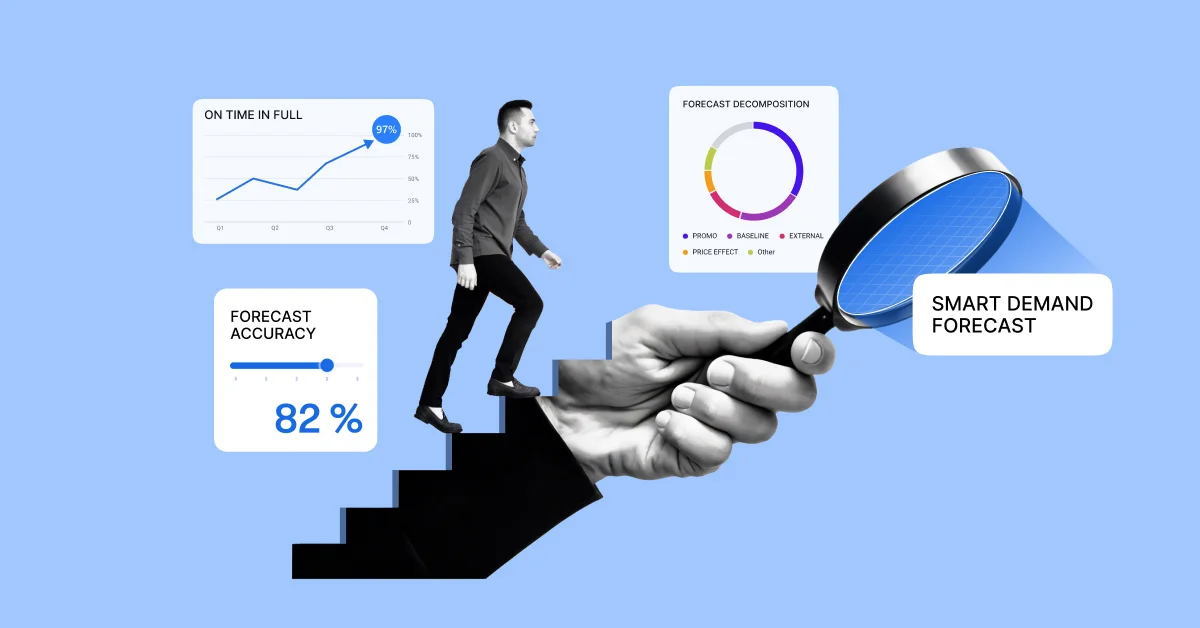
Demand forecasting is a complex and structured process that consists of several key stages:
High-Quality Data Collection
This is the first and most fundamental step in achieving accurate demand forecasts. It involves gathering historical sales data, marketing activity records, seasonality trends, and external influencing factors. The more high-quality data you have, the more precise your forecasts will be.
Analysis of Factors Affecting Demand
This stage involves studying both internal and external factors that influence demand. These include product or service pricing, promotions, discounts, marketing campaigns, inventory levels, seasonality, competitive environment, economic conditions, demographic indicators, and market trends. Correlation analysis is conducted to identify the most impactful factors, analyze dependencies, segment customers, and apply statistical methods for factor analysis.
Selecting the Right Demand Forecasting Method
Based on the results of the previous steps, the most effective demand forecasting methods (quantitative or qualitative) are chosen to suit specific business needs.
Building the Demand Forecasting Model
At this crucial stage, the actual forecast is created using the collected and analyzed data. Demand forecasting models can be based on various statistical tools such as linear regression and time series analysis. However, to ensure adaptability to new trends, market fluctuations, and other variables, traditional statistical models often fall short compared to AI-driven models.
The SMART Demand Forecast solution incorporates all the necessary tools for building flexible demand forecasting models. By leveraging AI algorithms, the system enhances forecast accuracy and responsiveness.
Testing and Optimizing the Forecasting Model
This step is essential for evaluating the model’s effectiveness in real-world conditions. Based on test results, adjustments are made to fine-tune the model for maximum accuracy.
- Applying the forecast to key business processes – In the final stage, the forecast is integrated into critical business operations such as inventory management, production planning, and marketing strategies, providing tangible value to the company.
Benefits of Demand Forecasting:
- Optimized Supply Chain Processes: Accurate product demand forecasting helps businesses manage inventory more efficiently, minimizing the risks of out-of-stocking or overstocking. This reduces storage costs and prevents lost sales due to unavailable products or services. By basing supply chain operations on reliable demand forecasts, companies can ensure smooth product movement along the supply chain, minimizing emergency shipments and delays.
- Better Production Planning: With precise demand forecasts, manufacturing teams can optimize resource utilization, ensuring the timely availability of raw materials and maintaining stable production flows.
- More Effective Marketing Campaigns: Understanding when and which products or services will be in high demand allows marketers to launch well-timed campaigns, maximizing sales potential.
- Cost Reduction and P&L Impact: Accurate demand forecasting helps lower costs by optimizing key business processes such as storage, production, marketing, procurement, and supply chain management. This helps align demand with available resources, positively affecting the company’s P&L since cost reduction and boosting the efficiency of these processes leads to the increase in both gross profit and net revenue.
- Enhanced Customer Service: Reliable forecasts allow businesses to plan resources efficiently. For example, knowing future demand helps ensure the right number of employees and products are available at specific locations to meet customer needs.
What Factors Influence Demand Forecasting Accuracy?
For AI-driven solutions, data quality is the most critical factor. When implementing the SMART Demand Forecast solution, the vendor assists in creating a universal data structure, which will later be used for modeling. This structure ensures the proper functioning of the model, allowing it to efficiently analyze information and provide accurate forecasts. Therefore, as part of the implementation project, SMART business analyzes the key business processes of the client and offers a ready-made template for data collection. The client only needs to prepare and submit the information to the vendor, which saves effort and time while ensuring successful implementation at later stages.
Factors Affecting Demand Forecasting
To accurately predict what exactly consumers need and in what quantity, various factors must be considered. These factors act like invisible threads, pulling demand indicators up or down, and the success of your business depends on their proper analysis. Among the key factors, the following can be highlighted:
- External Factors and Social Events: Think back to the pandemic, when everyone was rushing to buy protective masks and sanitizers. Trend analysis is a powerful tool for predicting significant and sudden changes in customer preferences.
- Pricing Policy: Discounts, promotions, or even a slight price increase can drastically impact your sales. People will always look for the best price-to-quality ratio. Understanding this pattern enables businesses to more accurately predict how demand will shift.
- Seasonality: Imagine an ice cream shop in winter versus summer. Obviously, demand drops in cold weather and surges in the heat. Understanding seasonal fluctuations and having precise demand forecasting for inventory helps businesses plan production capacity and stock levels, avoiding the pitfalls of overproduction or shortages.
- Economic Factors: Consumer purchasing power is shaped by income levels, inflation, and currency fluctuations.
- Competition: The actions of your competitors also play a crucial role. Analyzing the competitive landscape allows businesses to timely adapt their own strategies to maintain an advantage.
What Is Short-Term and Long-Term Demand Forecasting, and Which Approach to Choose?
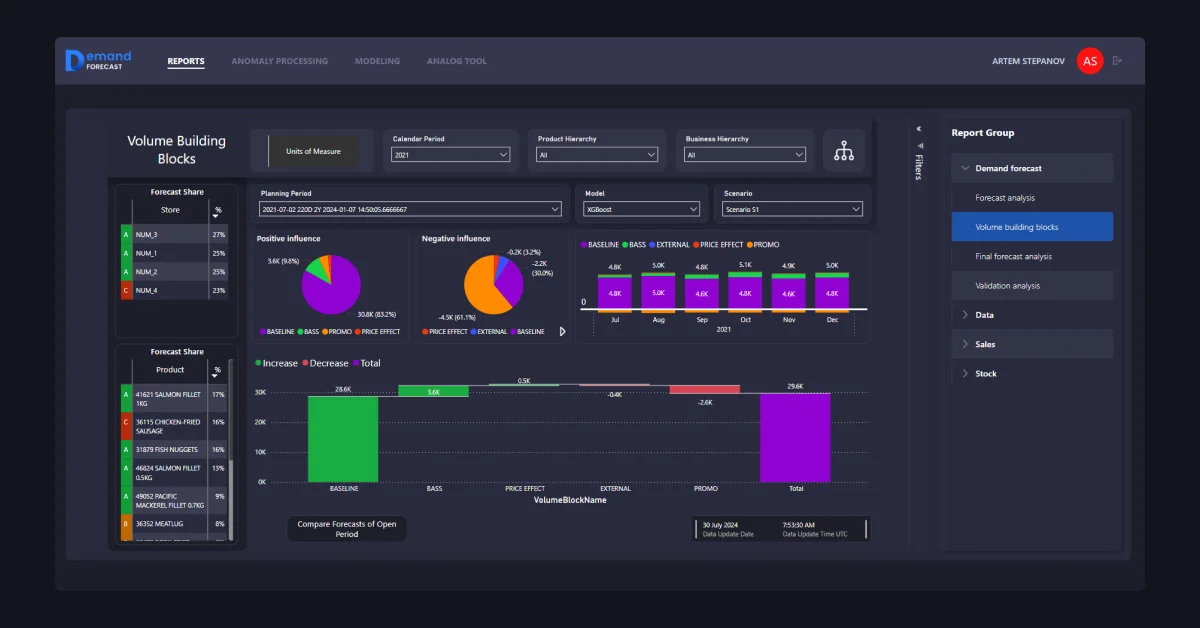
Demand forecasting is like planning a travel route: it’s important to know where you’re heading, but you also need to be aware of what lies just around the next corner.
Short-Term Demand Forecasting
Short-term forecasting covers the upcoming weeks or months, typically up to 12 months. Short-term demand forecasting can be used at both the macro level – such as forecasting overall demand for a specific type of product in a country or region – and at the micro level, predicting demand for individual products or services at a specific store, sales point, or among a certain customer category. Short-term demand forecasting allows companies to quickly react to changes caused by sudden demand spikes, seasonal peaks, or the launch of marketing campaigns. It requires close collaboration between sales, marketing, and operations departments, as their activities directly impact demand fluctuations. For example, a marketing campaign can significantly increase interest in a product, requiring immediate adjustments to inventory and supply chain operations.
Long-Term Demand Forecasting
Long-term forecasting is strategy-focused, predicting demand for more than a year while considering market trends, business development, and industry shifts. Just like short-term forecasting, it can be applied at both macro and micro levels. A long-term approach helps businesses understand which trends will dominate, how consumer behavior will evolve, and what resources and scaling efforts will be needed for future growth. For example, opening a new store or production facility requires not just an understanding of current demand but also an assessment of long-term potential.
Both long-term and short-term demand forecasting are equally important, regardless of the industry. In retail, short-term forecasts ensure shelves are stocked before peak periods, while long-term forecasts define the company’s overall direction. In manufacturing, where supply chains are complex, short-term forecasts help prevent supply delays, while long-term forecasts support production expansion planning. A balanced approach to forecasting is the key to flexibility, efficiency, and sustainable business growth.
What Are Quantitative and Qualitative Demand Forecasting Methods, and When Should They Be Used?
In demand forecasting, it is essential to find a balance between mathematical precision and an intuitive understanding of the market.
Quantitative Demand Forecasting Methods
Quantitative methods rely on numbers and statistics. They analyze historical data, seasonal trends, sales figures, and customer behavior. These methods are particularly effective when a large volume of historical data is available and when working in a market where demand patterns are well-predicted. When the question arises how to calculate a demand forecast, quantitative methods provide accurate results based on objective data.
Qualitative Demand Forecasting Methods
These methods introduce the human factor into forecasting. They consider expert opinions or, for example, customer feedback. Qualitative approaches are valuable when sudden market changes occur or when launching a new product without historical data. A well-balanced combination of quantitative analysis and qualitative assessment allows for a comprehensive view of future demand.
What Demand Forecasting Models Exist?
Most models can be broadly classified into time-series models and multifactor models. Time-series models analyze historical data to identify patterns: how demand has changed over a given period, whether seasonal fluctuations occurred, and what can be expected soon. For example, methods like moving averages or trend analysis allow for highly accurate demand predictions for products with a stable data structure.
Modern multifactor models go even deeper – they can forecast demand based on a wide range of factors, which simple statistical models may struggle to process. These factors may include price changes, new product launches, economic conditions, or even weather events. For example, a regression model helps determine how a change in one parameter (such as a discount) affects sales volume.
What Are Demand Forecasting Techniques, and Which Ones Best Meet the Needs of Modern Businesses?
Demand forecasting techniques range from simple and intuitive to complex analytical approaches. One of the most common techniques is extrapolation, where past trends or patterns are projected into the future. This method works well when demand is stable and predictable. However, in today’s world – where demand is often unstable due to abnormal spikes, shortages, and fluctuations – businesses require more advanced techniques that leverage multifactor models. These models account for seasonality and periodic fluctuations, such as holiday sales peaks or summer slowdowns, and filter out anomalies to improve accuracy.
As a result, the modern market demands more flexible and intelligent approaches. Businesses are increasingly turning to advanced techniques, such as artificial intelligence (AI) and machine learning (ML)-based modeling.
AI-Powered Demand Forecasting: Advantages and Challenges
One of the key advantages of AI-powered demand forecasting is its ability to quickly analyze vast amounts of data from multiple sources – a task that is far more efficient compared to manual methods. AI algorithms can detect complex interdependencies that might go unnoticed by humans and can adapt forecasts in real-time to reflect actual market changes.
However, like any technology, AI-driven forecasting comes with challenges and requirements – one of the most critical being data quality. If the data contains errors or gaps, it can significantly reduce forecasting accuracy. That is why it is crucial to establish a unified data structure and carefully select a vendor. For example, SMART business helps companies build a universal data structure, which minimizes errors and gaps and ensures high-accuracy forecasting.
AI-Powered Forecasting of Seasonal Demand Fluctuations and Promotions
Forecasting demand for seasonal and promotional products has always been a challenge due to their unpredictable nature. However, AI has eliminated these difficulties. Algorithms analyze past sales cycles and compare them with external factors. For example, AI can predict the exact amount of inventory needed for the Christmas season or determine how discounts will impact sales during a promotional campaign.
How to Use AI for Forecasting Demand for New Products?
Forecasting demand for new products is one of the most difficult tasks for businesses due to the lack of historical data. However, AI can solve this problem. By leveraging data on similar products, market trends, and consumer behavior patterns across different segments, intelligent algorithms can generate forecasts even for entirely new products.
Machine Learning in Demand Forecasting
The key advantage of machine learning (ML) is that it continuously improves and can analyze large datasets, uncovering hidden patterns and trends that traditional analysis methods might miss. However, it is important to note that forecast accuracy depends not on the amount of data but on its quality and relevance. To achieve reliable results, businesses must find the right balance between model complexity and generalization capabilities, filter out noise, and apply proper algorithms and validation techniques to prevent overfitting.
What ML Models Are Used for Demand Forecasting?
Machine learning models vary in approach and functionality, with each serving specific forecasting needs. The most common models include:
- Linear Regression – A simple yet effective model that analyzes the relationship between demand and key influencing factors.
- Random Forest – An ensemble model that works well with many variables and complex interdependencies.
- Gradient Boosting (XGBoost, LightGBM) – Ensures high forecasting accuracy by considering multiple factors simultaneously.
- Clustering Methods (K-means) – Helps group data to identify similar patterns and trends.
- Deep Neural Networks (LSTM – Long Short-Term Memory) – Particularly effective for time-series forecasting, making them useful for dynamic markets with rapid demand fluctuations.
- Transfer Learning Methods – Applied in cases where historical data is insufficient, such as when entering new markets or launching new products.
Since each company has unique business processes, there is no universal model that fits all needs. SMART business, with its deep expertise in machine learning and data analytics, can help identify the optimal model for your business. The company works with a wide range of modern ML models, all of which are supported by the SMART Demand Forecast solution. This ensures highly accurate demand forecasting, tailored to your business goals and the dynamic nature of today’s market, where consumer behavior is constantly changing.
Enterprise Demand Forecasting – Your Key to Efficiency and Seamless Supply Chain Operations
Accurate demand forecasting enables companies to optimize supplier coordination, production lines, and warehouse management, ensuring maximum efficiency with minimal costs. Forecasts help prevent warehouse overstocking while ensuring timely inventory replenishment during critical moments. Demand forecasting also plays a crucial role in streamlining order and supply processes, directly impacting overall business expenses.
Demand Forecasting in Inventory Management and Stock Optimization
Without precise demand forecasts, businesses risk either excess inventory or stock shortages, leading to financial losses and poor customer service levels. By leveraging demand forecasting in inventory management, companies can accurately determine the optimal stock levels required to meet market demand efficiently.
Demand Forecasting for Finished Goods
Integrating SMART Demand Forecast with the Microsoft Dynamics 365 Business Central ERP system can be a game-changer for demand-driven inventory management. This integration allows businesses to combine demand forecasts with real-time inventory data within a unified system. For example, the SMART Demand Forecast system analyzes current sales data, seasonal fluctuations, and other influencing factors to generate accurate demand forecasts. When these forecasts are integrated into Microsoft Dynamics 365 Business Central, procurement and inventory decisions can account for both actual stock levels and future demand trends for finished goods. This integration enables companies to automate purchasing and logistics processes, reduce decision-making time, and minimize resource inefficiencies. Additionally, it provides centralized access to all data within a single digital space, allowing businesses to make informed, data-driven decisions in real time based on consolidated and up-to-date information.
How Can Demand Forecasting Be Useful in Various Business Industries?
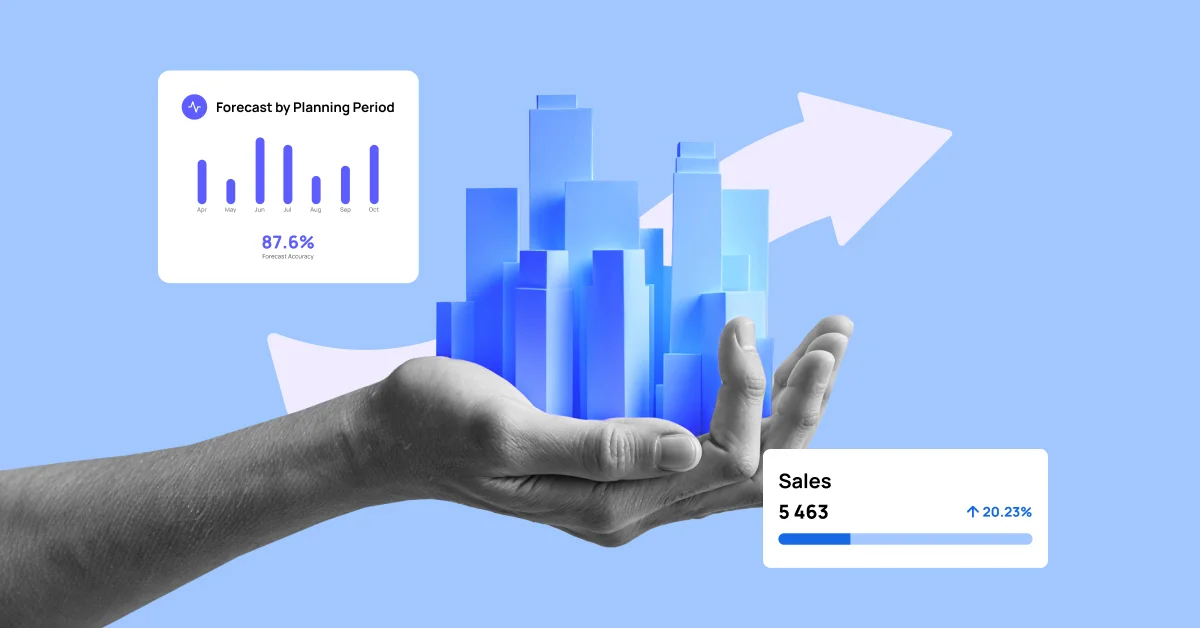
Demand forecasting plays a critical role in any industry:
- In retail – product demand forecasting helps set optimal inventory levels to meet customer needs without overstocking. Additionally, accurate forecasts allow for effective assortment and stock planning for each individual store, considering location-specific demand.
- In the apparel industry – accurate demand forecasts allow for better production planning, optimized raw material purchasing, and inventory management, reducing material costs and minimizing the risks of overproduction or product shortages.
- In the automotive industry – it helps optimize production lines, which is crucial to avoid delays in car deliveries and spare parts.
- In the aviation industry – with precise forecasting, airlines can better plan their transport volumes and workforce requirements, reducing fuel and personnel costs.
- In the fashion industry – a key aspect in this sector is accounting for seasonality and trends. Accurate demand forecasting for seasonal collections helps companies plan purchasing and production volumes more effectively, minimizing unsold stock, avoiding prolonged sales, and lowering marketing campaign costs.
- In the food industry – forecasting helps predict demand fluctuations, preventing costs from waste, surpluses, or ingredient shortages, ensuring timely and quality production.
- In manufacturing (industrial) sectors – demand forecasting allows companies to optimize production and raw material purchases according to market needs, increasing the efficiency of key business processes and reducing costs.
- In the pharmaceutical industry – demand forecasting helps manage pharmaceutical inventory, considering regional needs and seasonal disease fluctuations.
- In the service sector – forecasting aids in optimizing and efficiently distributing labor resources, ensuring quality customer service.
- In the tourism industry – accurate demand forecasting allows travel companies to better plan tours, offering optimal pricing to customers and reducing the risk of overloading popular destinations.
- In the hospitality industry (HoReCa) – demand forecasting helps manage service levels, ensuring high-quality service for guests and maximizing hotel profits. For restaurants, forecasting helps set up efficient product ordering, reducing ingredient purchasing costs and preventing waste due to overstock or shortages.
In SMART business’s client portfolio, there are successful examples of demand forecasting using the SMART Demand Forecast solution, whose implementation opens new opportunities for companies worldwide. A prominent example of this was the implementation of the solution for McDonald’s Georgia, which achieved 83% sales forecast accuracy for each restaurant in the network, based on weekly data aggregation over a four-week period.
Request a presentation to learn more about how this solution can benefit your company!