Expertise

  • All
  • Expertise
  • Success stories
  • Releases
29 MIN READ
McDonald’s Georgia: Valuable Business Lessons from Experience in AI-Driven Demand Forecasting
“Just as electricity transformed almost everything 100 years ago, today I actually have a hard time thinking of an industry that I don’t think AI will transform in the next several years,” — Andrew Ng. Today, these words from one of the world’s leading AI experts sound like a rational explanation of what is already happening in the business environment. Companies are increasingly viewing AI not as an experiment or a technological trend, but as a tool for improving operational predictability. This is especially true for industries with high demand volatility and complex supply chains — retail, distribution, consumer goods manufacturing, e-commerce, and HoReCa. In these sectors, forecasting accuracy directly affects costs, service levels, and the ability to scale operations sustainably.

The Economic Impact of AI in Demand Planning: From Global Analytics to the McDonald’s Georgia Case

According to McKinsey analysts, the use of AI solutions in demand management and logistics can help companies reduce inventory levels by an average of 20–30%, decrease logistics costs by 5–20%, and optimize procurement costs by 5–15%. This effect is achieved thanks to algorithms’ ability to analyze large volumes of data and take into account significantly more factors than traditional forecasting methods allow. Almost two years ago, McDonald’s Georgia restaurant chain shared its experience of implementing SMART Demand Forecast from SMART business, which enabled an increase in demand forecasting accuracy across the entire network. Today, as the use of artificial intelligence in planning is gradually moving from the category of innovation to a business necessity, this case takes on a new meaning. In fact, the company began transforming its forecasting processes before AI became a mainstream tool for operational efficiency. In this article, McDonald’s Georgia revisits its experience from the perspective of accumulated practice and shares insights on how AI-based demand forecasting today helps the company maintain operational stability, plan resources more accurately, and scale its business more confidently in a rapidly changing market environment.

The Real Business Cost of Inaccurate Demand Forecasting

When companies talk about demand forecasting, it is often perceived as a matter of analytics, models, or KPIs, notes Artem Stepanov, Product Owner of AI solutions at SMART business. However, in reality, forecast accuracy is directly tied to business financial results. Even minor errors or deviations can translate into significant operational losses. Let’s consider two common scenarios:
  1. Overestimated demand excess At first glance, this may look like a safe strategy, since products are available and sales are not interrupted.
However, in practice, excess inventory means locked working capital, increased storage costs, and the risk of write-offs due to expired shelf life or shifts in demand. As a result, assets that were meant to generate profit turn into a cost burden.
  1. The opposite situation underestimated demand even more painful Out-of-stock situations directly lead to revenue losses, missed sales, and negative customer experience. In highly competitive industries, this also creates a risk of long-term customer churn, as customers quickly switch to alternatives.
The key insight is that excess and shortage of inventory are not two separate problems, but two extremes of the same process. They share a common root cause — inaccurate demand forecasting. This is why businesses are constantly forced to balance between the risk of overstocking warehouses and the risk of lost sales, searching for an optimal point of operational efficiency. From an analytical perspective, even a small forecasting error can have a large-scale economic impact. A deviation of just a few percent can lead to hundreds of thousands or even millions in additional costs across logistics, procurement, and inventory management.

Small Demand Changes — Large Operational Fluctuations

An additional challenge for companies is the ability of operational systems to correctly respond to changes in demand. In supply chains, a phenomenon known as the bullwhip effect is often observed, where small fluctuations in end-customer demand lead to significantly larger fluctuations in production, procurement, and logistics. Daily sales changes may be random or short-term, but planning systems often interpret them as a stable trend. In response, companies increase or sharply reduce orders in an attempt to compensate for expected changes. This overreaction triggers a cycle of operational instability: warehouses may become overstocked in one period and simultaneously empty in another. An additional factor is the delay in decision-making and information transfer along the supply chain. The longer the chain, the stronger the amplification of demand variability. As a result, even small fluctuations at the store or restaurant level can translate into proportionally much larger changes in procurement, production, and transportation plans. For businesses, this means rising transportation and expedited delivery costs, increased volatility in service levels, and greater difficulty in maintaining a stable operating model. Thus, the problem is not demand fluctuation itself, as it is a natural characteristic of any market. The critical question is how quickly and accurately forecasting and planning systems can adapt to these changes without accumulating operational debt.

Operational Debt: When Planning Turns into “Firefighting”

Inaccurate demand forecasting affects not only costs or service levels. Over time, it creates what is known as operational debt — an accumulation of inefficient decisions and fragmented processes that gradually reduce a company’s ability to operate in a stable and predictable way. In such conditions, planning stops being a strategic function and becomes reactive. Teams are forced to constantly respond to crises instead of systematically optimizing processes and improving decision accuracy. This most often manifests in symptoms such as the following:
  • planning is replaced by a continuous “firefighting” mode, where the main focus is on solving urgent operational issues;
  • the number of rush orders and escalations increases (i.e., situations that must be urgently escalated to higher management levels or require additional resources to resolve), which drives up logistics costs;
  • decision-making becomes slower due to information overload and process misalignment. When data comes from different sources, it requires manual validation or cross-department alignment, which delays the business response to demand changes;
  • stress levels rise within planning and logistics teams, increasing the risk of burnout.
As a result, the business loses both forecasting accuracy and operational agility. Processes formally continue to function, but each new error accumulates and gradually turns into systemic instability. This creates a situation where even small demand changes require disproportionately large efforts to manage.

“Importantly, operational debt does not appear overnight. It is formed gradually — through repeated compromise decisions, manual adjustments, and reactive actions. That is why for many companies the question is no longer whether demand forecasting should be automated, but how quickly the business is ready to move from a reactive management model to a proactive one.”

  • Artem Stepanov Product Owner of AI Solutions, SMART business

From Manual Analysis to AI: How Decision-Making Speed Has Evolved

To understand why decision-making speed has become critical for business, it is worth looking at how tools for working with data have evolved. Each era brought its own capabilities and limitations — from manual spreadsheets to integrated systems and modern AI solutions.

Traditional Methods: The Era of Manual Analysis, When Decisions Arrive Too Late

Until recently, most companies relied on spreadsheets as the primary tool for data analysis and planning. As a result:
  • decisions were made with delays of weeks or even months
  • data was fragmented and often inconsistent
  • analytics answered “what has already happened” rather than “what will happen next”
In practice, businesses operated in a post-fact mode, reacting to events when it was already difficult or too late to influence them.

Connected Era: Faster, but Still Not Enough

The next stage was system integration and the emergence of a unified information environment. Data started to “communicate” with each other, and processes became more synchronized. This enabled:
  • reducing decision-making time to days
  • using basic rule-based forecasting models
  • automating part of operations, which improved data processing speed
However, even at this stage, businesses remained largely reactive. Systems could process information faster but still could not fully anticipate future developments.

The AI Era: From Reaction to Proactive Action

Today, business is moving into a fundamentally different reality — where the delay between data and decision is almost eliminated. AI systems are changing the very approach to management. They:
  • analyze data in context, taking into account dozens of interconnected factors
  • build forecasts based on changes in market and customer behavior
  • adapt to changes in real time
  • enable proactive decision-making rather than post-fact reaction
In other words, businesses are no longer chasing events — they are starting to stay ahead of them.

What This Means in Practice

The key insight here is simple — today, competitive advantage is defined not by who has more data, but by who can turn it into decisions faster. In the context of demand forecasting, this means:
  • faster response to changes in customer behavior
  • reduced accumulation of operational debt
  • more stable processes even in a highly dynamic environment
This is exactly where the McDonald’s Georgia experience becomes particularly illustrative. The company has effectively moved to a different decision-making speed. Request a consultation

When Growth Complicates Forecasting: The McDonald’s Georgia Journey

To understand exactly when the need to transition to AI arises, it’s worth looking at a real business context. In the case of McDonald’s Georgia, the key trigger for change was the rapid expansion of the chain. Since 2019, the number of restaurants has grown by 75% — reaching 28 locations across the country. In practice, this means managing dozens of separate operational units, each with its own demand dynamics, local specifics, and customer behavior patterns. At this scale, traditional forecasting methods were no longer effective enough, and it became clear that the business needed to move toward more modern approaches and tools.

“For us, it all started with a simple question: what exactly are we trying to solve? It came up at the moment when we began seriously considering AI-driven forecasting. Today, our network density is about 1.22 restaurants per 100,000 urban residents. And the faster we grew, the more complex planning became. Maintaining forecast accuracy was getting increasingly difficult, as each new restaurant required a separate approach. When you have a small number of locations, an experienced planner can still ‘feel’ the demand. But when at some point you realize you're managing not one business, but nearly thirty simultaneously — that’s a completely different game.”

  • Giorgi Asatiani Head of BI & Data Analytics, BI & Data Analytics Department, McDonald’s Georgia

Why Manual Methods Failed to Scale

Business growth tends to expose the limitations of manual tools. The most critical ones include:
  1. Lack of scalability in manual forecasting — maintaining accuracy would have required the company to continuously expand its planning team. In effect, this meant building an “army of analysts,” which directly contradicted the goal of operational efficiency.
  2. Limited data granularity — working with aggregated, network-level data made it impossible to capture differences between individual restaurants. As a result, decisions were based on “average” indicators rather than real, location-specific insights.
  3. No external factors in forecasting — manual models largely failed to account for contextual variables such as weather conditions, local events, marketing activities, and more.
As a result, McDonald’s Georgia was operating in a reactive mode rather than a predictive one.

When One Market Means Dozens of Different Scenarios

These limitations became especially evident at the level of individual cities — and even specific restaurants.

“For example, in Batumi, a rainy weekend can sharply reduce the number of drive-thru orders while simultaneously increasing demand for delivery. In Tbilisi, a football match day can create peak load in the restaurant dining area and shift the demand structure within just a few hours. These kinds of scenarios are difficult to predict manually because they depend on a combination of constantly changing factors. And when the number of variables exceeds the capacity of manual analysis, the question is no longer how to optimize the process, but how to rethink it entirely.”

  • Giorgi Asatiani Head of BI & Data Analytics, BI & Data Analytics Department, McDonald’s Georgia

Why McDonald’s Georgia Chose a Ready-Made AI Solution Instead of Building One

Once the McDonald’s Georgia team realized that manual forecasting was no longer effective, the logical next question was how exactly to change their approach. “We were choosing between two scenarios: building our own forecasting system or implementing a ready-made AI solution. At first glance, custom development may seem attractive as an opportunity to create a tool tailored specifically to your needs. However, in reality, this path is much more complex and riskier. That’s why our decision to implement a ready-made solution was driven by a number of specific advantages we saw,” Giorgi explains.
  1. Speed: When results are needed not “someday” but now, speed becomes the key factor. Developing a custom solution from scratch — even with external contractors — could take several years, just to reach a working prototype stage. Meanwhile, the business needed change “yesterday.”
That’s why McDonald’s Georgia chose an approach that allows them to:
  • get initial results immediately after diagnostics
  • avoid long development cycles
  • move quickly from problem to tangible impact
In essence, this meant a shift in mindset: not building a tool but obtaining results.
  1. Focus on core expertise: The restaurant business ≠ AI development. McDonald’s is a hospitality business, not a software developer. While the team has strong analytical expertise, building and maintaining ML models requires additional specialized skills. Moreover, the work does not end once a model is created. It requires:
  • continuous monitoring
  • regular retraining
  • ongoing support and development
In other words, it effectively requires a dedicated machine learning team. In this context, the ready-made SMART Demand Forecast solution enabled the company to:
  • focus on business growth rather than maintaining AI systems
  • concentrate on using insights instead of developing tools
  • gain access to already established expertise
  1. Flexibility and future readiness: In the QSR (quick service restaurant) industry, demand is shaped by dozens of variables, including:
  • seasonality
  • promotions
  • weather conditions
  • sales channels
  • local events
That’s why McDonald’s Georgia needed a system that:
  • can already handle these dependencies out of the box
  • continuously learns from new data
  • adapts to changes without requiring a complete rebuild
This became one of the decisive arguments in favor of the ready-made SMART Demand Forecast AI solution.
  1. Less development more business value: By implementing a ready-made solution, the McDonald’s Georgia team was able to:
  • work with forecasts rather than models
  • focus on planning and decision-making
  • leverage a wide range of capabilities that would have required significant resources in a custom development scenario
“We needed results in months, not years. A long development cycle always carries the risk of losing touch with reality: by the time a custom model is ready, the restaurant network, demand structure, and even sales channels may have already changed the rules of the game. That’s why it was critical for us to implement a solution that delivers results here and now, without slowing down the business,” Giorgi emphasizes. In other words, technology stopped being a project and immediately became a working tool.

“The McDonald’s Georgia case clearly illustrates a shift in approach that is becoming increasingly common today: companies are no longer striving to own the technology — they aim to extract value from it as quickly as possible. In this context, the choice between a custom solution and a ready-made product is not about tools. It’s about speed, focus, and the business’s ability to adapt to change — and that’s exactly what the SMART Demand Forecast solution enabled.”

  • Artem Stepanov Product Owner of AI Solutions, SMART business
Request a consultation

How AI Turned Forecasting into Actionable Decisions

In the case of McDonald’s Georgia, AI became part of a closed-loop demand management system — where data, forecasting, and operational decisions function as a unified whole.

From Fragmented Data to a Complete Picture

Any forecasting starts with data. But in real business environments, it is rarely perfectly structured. “The importance of a solid data foundation should not be underestimated. High-quality, clean data is the key to success for any project like this. We were fortunate: six years ago, we consciously invested in developing our data infrastructure, and by the start of this project, it was already at a high level. At the same time, this case required much deeper granularity. New types of data emerged that we had simply not tracked before. This forced us to revisit some of our assumptions, rethink how certain metrics are defined, and ensure consistency of historical data,” Giorgi explains. At McDonald’s Georgia, this meant working with a set of diverse signals:
  • sales data from POS systems
  • shipment data
  • promotional activities
  • weather conditions
Individually, each of these factors provides only part of the picture. But together, they create the context in which real demand emerges. The AI within SMART Demand Forecast makes it possible to combine these fragmented data sources and work with them as a single system — without losing detail or local nuances. As the project team emphasizes, the model is not a “black box.” Every stage — from data integration to factor consideration — remains transparent and controllable.

The “Brain” of the System: How the AI Model Works in SMART Demand Forecast

The next level is the model itself, which transforms data into forecasts. And here, not only accuracy matters, but also how manageable and interpretable the process is:
  1. The model is regularly retrained on new data.
  2. It accounts for dozens of variables—from weather to promotional effects.
  3. It allows users to understand why the forecast looks the way it does.
This is critically important for business. Trust in a forecast is built not only on numbers, but also on understanding the logic behind them.

What Matters Most — Execution

The real value of AI lies not in the model itself, but in how its results are used. At McDonald’s Georgia, forecasts are directly embedded into core business processes:
  • sales and operations planning (S&OP)
  • production scheduling
  • inventory management
  • procurement
In other words, the forecast is automatically translated into concrete actions. As a result, analytics is no longer a standalone function — it becomes an integral part of the operational cycle.

“A forecast only has value when it changes decisions. Even the most accurate model remains just analytics if it doesn’t impact the weekly planning cycle. When forecasting becomes part of the process, it’s not just accuracy that improves — the entire logic of how the business operates changes: the number of urgent orders and ‘firefighting’ decisions decreases, the risk of excess inventory is reduced, service level stability improves, and planning becomes more predictable.”

  • Giorgi Asatiani Head of BI & Data Analytics, BI & Data Analytics Department, McDonald’s Georgia

What the AI Implementation Journey Looks Like in Practice

Another key takeaway from the McDonald’s Georgia case is that transitioning to AI is not a one-time transformation, but a step-by-step process. A crucial role in this process is played by building the right foundation:
  1. Data as the starting point: The first and most critical stage is working with data. Together, the SMART business team and McDonald’s Georgia built a unified structure that includes:
  • sales history
  • restaurant characteristics
  • external factors
  • promotional activities
  • product life cycles
  • even specific rules (such as the COVID-19 period)
This may seem like “basic work,” but it determines the quality of all subsequent steps. If the data is unstructured, even the best AI will produce flawed results.
  1. A unified data logic across the business: The next step was adapting the client’s data to an existing universal structure that is clear to different departments. This made it possible to:
  • align perspectives across teams
  • avoid data conflicts
  • operate with a single version of the “truth”
  1. Omnichannel as a must-have condition: For McDonald’s Georgia, one of the key challenges was multichannel approach. Demand is shaped not only at the product or restaurant level, but also at the channel level:
  • dine-in
  • drive-thru
  • delivery
Therefore, the system was designed to capture the business across all these channels simultaneously.

“Each sales channel has its own demand rhythm. For example, drive-thru orders are fast and impulsive. Delivery typically involves a higher average check and is much more sensitive to weather or local events. Dine-in service is a more stable and predictable channel. Initially, we worked with aggregated data in Excel at the system level. But at the level of individual restaurants, this effectively meant operating ‘blind.’ Excel can still be a useful tool, but it cannot account for external signals such as weather, local events, or the ripple effects of marketing campaigns. That’s exactly where SMART Demand Forecast became the solution that allowed us to see the real demand picture in all its complexity.”

  • Giorgi Asatiani Head of BI & Data Analytics, BI & Data Analytics Department, McDonald’s Georgia
  1. Pilot and system training: Before full deployment, the model goes through a testing phase:
  • forecast accuracy is validated
  • anomalies are identified
  • calibration is performed
  1. Scaling and a new team role: After implementation, the forecasting process changes fundamentally. As noted by the McDonald’s Georgia team:
  • up to 90% of operational work is handled by the system
  • the team focuses on validation and decision-making
  • the focus shifts from routine tasks to a strategic level
In effect, AI did not replace people — it transformed their role. Request a consultation

AI “Under the Hood” in SMART Demand Forecast: From Raw Data to Management Decisions

SMART Demand Forecast is an end-to-end software solution built within the Microsoft ecosystem — from data integration to analytics in Power BI. If you break it down into components, the core logic becomes clear: minimize the human factor where it creates errors and amplify it where expertise is needed.

Data as the Foundation: Why AI Doesn’t Work Without It

“Any forecasting starts not with algorithms, but with data. And there’s a simple but critical truth that is often underestimated: garbage in — garbage out. If poor-quality or chaotic data enters the system, the results will be just as flawed or useless. Output quality always directly depends on input quality.”

  • Artem Stepanov Product Owner of AI Solutions, SMART business
That’s why the first stage in SMART Demand Forecast is not “AI magic,” but rather systematic groundwork:
  • automatic data quality analysis — the system detects gaps, errors, and inconsistencies
  • historical sales data cleansing — separating real demand from noise
  • identification of trends and seasonality
At this stage, AI acts not as a forecaster, but as a data “clean-up” mechanism.

The Core Engine: Where Real AI Comes In

Once the data is structured and cleaned, the next phase begins — what is typically referred to as AI, though in practice it goes far beyond a single model. At the heart of SMART Demand Forecast is an ML engine that:
  • automatically selects the best model for a specific business case
  • works with both regular demand and promotions (including cannibalization effects)
  • continuously retrains on new data
But its real strength lies in the details:
  1. Solving the “no history” problem with New products or new locations are one of the most challenging aspects of forecasting. This is a global issue: when there is no historical data, there is nothing to base a forecast on.
SMART Demand Forecast addresses this through an analog-based approach:
  • the system identifies and allows selection of similar SKUs or restaurants
  • builds forecasts based on their behavior
  • adapts them to the new context.
This allows the business to move from guesswork to data-driven scenarios.
  1. Anomaly control instead of Sharp spikes or drops in demand are common in any business. The key question is how to interpret them. In this case, the SMART business solution:
  • automatically detects anomalies (using approaches such as the 3-sigma rule or ML algorithms)
  • suggests smoothing options
  • allows users to confirm or adjust them
This is a critical point: AI does not “decide instead of humans” — it highlights where human intervention is needed.
  1. Scenario Modeling: Testing Decisions Before They Go This capability is about working with the future rather than only predicting it. For example:
  • what happens if a 50% discount is applied on Friday instead of Monday
  • how demand changes when a new product is launched
  • how multiple promotions interact when running simultaneously
This is the real shift from forecasting to demand management.

When Complex Mathematics Turns into Decisions

It is also important to understand how the output looks from a business perspective. All calculations are translated into clear, actionable analytics:
  1. How much the forecast can be trusted — the system shows accuracy levels and helps assess risks before decisions are made.
  2. Where the forecast consistently fails — bias monitoring helps identify systematic distortions (for example, persistent under- or overestimation of demand).
  3. What this means in financial and operational terms — analytics shows the impact of forecasts on inventory, product availability, and potential losses or overstock situations.
The key point is not that the system “does calculations,” but that managers can see cause-and-effect relationships and use them directly in decision-making — from procurement to promotion planning.

Why SMART Demand Forecast Is Not “Rocket Science,” but a Daily Tool

The system is designed to be practical and easy to use, providing several key advantages:
  • A web application accessible via a corporate account;
  • A clear workflow: upload data → select period → handle anomalies → train model → process promotions and analogs → generate forecast;
  • Visual charts showing the difference between raw and cleaned data;
  • The ability to quickly apply corrections and immediately see the impact.
The combination of high-quality data + AI + human control transforms forecasting from retrospective analytics into a forward-looking decision-making tool. Request a consultation

McDonald’s Georgia Results That Changed the Rules of the Game

The McDonald’s Georgia team notes that planning accuracy has improved at all levels. But what matters most is where this improvement became visible.

A New Level of Granularity for Business

Where forecasting previously operated at the level of the entire network or large segments, it now delivers accuracy at the level of individual restaurants:
  • the 4-week-ahead forecast matches reality with 83% accuracy for each individual location
  • for products that account for 70% of sales, accuracy exceeds 85%, which is a critical metric for many business areas, especially supply chain management

“Such high indicators mean that we are now seeing real demand behavior — not averaged, but local. For example, the difference between a restaurant in the city center and one on a highway — something that used to be lost in aggregated data. We can dive into channel structure or operate strictly at the level of an individual restaurant, depending on the task. This level of forecasting was previously unimaginable. And it significantly increases our confidence in operational decisions.”

  • Giorgi Asatiani Head of BI & Data Analytics, BI & Data Analytics Department, McDonald’s Georgia

Growth No Longer Requires Proportional Team Expansion

Despite scaling the network, McDonald’s Georgia managed to avoid expanding their planning team. In practice:
  • the system handles up to 90% of analytical work
The remaining 10% is local context added by the company — because even with rapid AI development, the human factor remains essential, especially in a business where customer mood and behavioral nuances strongly influence demand
  • forecasts are no longer created manually — they are generated and updated automatically
  • the team’s role has shifted from building forecasts to validating and controlling them
“In fact, the process is still overseen by a single experienced planning manager. But while they used to build forecasts manually, now they review, adjust, and make decisions based on ready-made models. The system operates continuously, 24/7, analyzing data, tracking changes, and adapting forecasts to new conditions — without the need to expand the team,” Giorgi explains. AI-driven forecasting has allowed McDonald’s Georgia to shift focus — from routine operations to higher-level decision-making. As a result, this creates an entirely new level of business planning that is already being felt across different company functions. The platform is built on a continuous learning cycle. McDonald’s Georgia uploaded historical sales data starting from 2020, and with each new update, the system goes back 24 months and retrains the model. This ensures that forecasts are always based on up-to-date data while still accounting for historical trends and patterns. And all of this happens “behind the scenes.” As a result, the company gains flexibility and can focus on planning and decision-making — rather than the technical aspects of building models.

Gaining Control Over What Used to Be a “Blind Spot”

Forecast granularity at the level of individual restaurants, sales channels, and even “product–channel” combinations highlights problem areas in demand and sales that were previously lost in aggregated figures. “We are a multichannel business, and it was important for us to have a solution that allows us to analyze demand not only at the level of restaurants and products, but also across sales channels. However, if we talk about the challenge, it was more on the developer’s side than ours. We only needed to clearly define the requirement — after that, the SMART business team took over the complex part. They went deep into understanding how our business actually works, not just the numbers. We went through several validation cycles together to ensure that the model’s results reflect real demand behavior across different channels,” Giorgi noted.

Improved Collaboration Across Teams

Another important outcome is a qualitative shift in internal coordination. This is not just about making work “more convenient,” but about changing the very logic of interaction.
  • Faster communication — previously, aligning decisions often required additional explanations: where the forecast came from, why those specific numbers, what assumptions were used. Now these questions disappear, as everyone works with the same data and sees the same picture. This significantly reduces discussion time and allows teams to move to action faster.
  • A single understanding of data and demand across all levels — operations, marketing, supply chain, and top management no longer view the business through different “versions of the truth.” The AI model creates a unified forecasting baseline that is interpreted consistently by everyone. As a result, situations where departments rely on their own calculations or assumptions are eliminated. Everyone now operates within a shared context.
  • Increased trust in team decisions — when forecasts consistently demonstrate high accuracy at the level of individual restaurants and channels, they stop being a “hypothesis” and become a reliable decision-making tool. This changes team behavior: instead of relying on intuition or “playing it safe,” the business starts acting more confidently and proactively.
“Ultimately, AI-driven forecasting powered by SMART Demand Forecast has become a common language for our business — from the operational level to top management. And this is what allows the company to move faster: not wasting time aligning on reality, but working with it right away,” Giorgi concludes. If you also want to manage demand without blind spots in decision-making and adapt to market changes quickly and effectively, SMART Demand Forecast will help you gain a transparent view of your business future today. Request a consultation, and the SMART business team will help you implement AI-driven forecasting — from data collection to integrating results into operational processes. Request a consultation
4 MIN READ
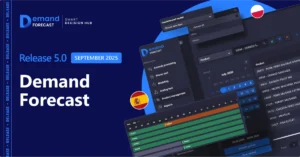
SMART Demand Forecast 5.0 release banner
Release 5.0. SMART Demand Forecast: A New Level of Demand Management
In today’s world, where forecast accuracy directly impacts profitability and competitiveness, SMART Demand Forecast continues to evolve. With Release 5.0, we have significantly expanded the solution’s capabilities, making it more intuitive, flexible, and accessible for companies of any size. This release delivers major UI enhancements, extended analytics, and new functionality that enable users to track product lifecycle directly in the interface, manage promotional activities, and generate forecasts for companies operating across multiple markets.

Redesigned Navigation

We have completely reworked the navigation system, introducing a modern side menu with quick access to profile, settings, and key pages. Users can now see indicators of active processes and explanations for blocked pages, as well as switch between collapsed and expanded menu modes. This improves navigation speed, increases system transparency, and provides a unified, modern look and feel for the interface.

New Product Management Page

This release introduces the Assortment Management page for controlling product lifecycle and creating dummy products. With advanced filters, product history, and an interactive Gantt chart, users can easily monitor product statuses over time. This simplifies assortment planning, reduces the risk of errors, and accelerates business processes through automation and flexibility.

New Promo Tool Page

We have added a unified interface for creating, editing, and analyzing promotional campaigns. The Promo Tool enables users to manage promotions and discounts while minimizing manual work. It supports building various promotional scenarios — from campaign periods and product selections to discount depths — to model their impact on demand. With these new capabilities, users can test different scenarios, compare their effectiveness, and optimize promotions that directly influence sales and customer engagement.

Interface Localization

With added support for Polish and Spanish, SMART Demand Forecast becomes even more accessible to a broader user base. Each user can select their preferred language in their profile, and the system will automatically adapt the interface and analytics accordingly. This opens up new market opportunities and improves user satisfaction by providing a familiar language environment.

New Levels of Business Aggregation

Release 5.0 introduces forecasting capabilities across multiple countries as well as by different sales types. This enables international companies to generate forecasts for several markets simultaneously and to analyze cross-channel relationships within a single store in greater detail. Such granularity expands analytical horizons and supports more accurate decision-making by showing how demand shifts under the influence of various factors — seasonality, promotions, cannibalization, or weather — across online and offline sales, deliveries, and more.

Optimization of Core Computational Processes

We have migrated all computational processes to Databricks Workflows, reducing execution time and lowering resource costs. In addition, this new approach improves customization options for process runs and enhances overall system scalability.

Adaptive Data Display

Different business departments operate with different planning horizons: manufacturing and logistics typically work with monthly timelines, while sales and finance may rely on weekly periods. The most complex situation arises when a week overlaps two months, creating a risk of distortions in forecasts and plans. Clear aggregation rules are therefore essential to ensure data accuracy and consistency across departments. With the new functionality introduced in this release, the system automatically adjusts data distribution based on seasonality and the logic of your operating period, ensuring accurate monthly reports without skews or inconsistencies. SMART Demand Forecast 5.0 is a major step forward — helping companies forecast with higher precision, manage data more efficiently, and scale their business faster.
10 MIN READ
Robot delivering boxes to stores — supply chain automation and logistics improvement
How AI in Retail Helps Optimize Inventory and Prevent Write-offs: No Time to Lose, Time to Earn
Globally, retail faces two major challenges that lead to profit loss and, consequently, slow down growth. Both result from inventory management errors: overstock and out-of-stock. According to research by IHL Group, in 2023, the mismatch between retail inventory and actual demand in the United States was estimated at $1.77 trillion — exceeding the combined GDP of Latin or South America’s retail sector. Of this amount, $562 billion is attributed to excess stock that retailers try to sell at least at cost price or even lower. However, some of this inventory must still be written off, meaning it is discarded. European retailers face similar problems. According to the reputable media outlet Internet Retailing, in 2023, British retailers were forced to sell nearly half (48%) of their products at discounted prices due to overstock. Meanwhile, the influential outlet Customer Think estimates that annual losses due to stock-outs amount to approximately 4% of the average retailer’s profit.

How Companies Lose Money Due to Poor Inventory Management

Both overstock and out-of-stock situations are caused by inaccurate demand forecasting. Why? Because demand forecasting is the starting point of the entire supply chain system. It triggers the planning mechanisms for procurement, production, and logistics. Even a small error at this stage leads to a rapid accumulation of operational costs at every subsequent link in the chain. Let’s take a closer look at how this works. Order a presentation

Stop Wasting Money: Why Overstock Is a Major Profit Killer for Retailers

If a company overestimates demand and brings in more goods than consumers are willing to buy, it primarily results in inefficient resource use. Instead of being a strategic investment that drives growth, money effectively gets “frozen” on warehouse shelves. But this is not the only loss caused by overstock. One must also be prepared for unpredictable growth in operational expenses — in particular, warehousing and logistics costs. At the end of 2022, Bloomberg published striking figures: despite all efforts to sell excess goods, nearly 8% of them worldwide ultimately become waste. This means that each year more than $160 billion worth of unsold products ends up in landfills.

Out-of-Stock: Why It’s Dangerous for Business

On the other hand, out-of-stock means lost sales. But, as with overstock, these losses — though obvious — are not the only ones. Frequent out-of-stock situations directly lead to a loss of market presence. Perhaps the most painful consequence for businesses in the era of customer-centric service is a decline in customer loyalty. According to research by Customer Think, 37% of consumers who don’t find the product they need on the usual store shelves try to purchase it elsewhere — either on their way home or online. In most cases, these customers are lost to the business forever.  

How Retailers Can Optimize Inventory Levels and Stop Losing Money

How can retailers organize their business processes in a way that enables them to respond quickly to ever-changing consumer expectations in each individual store? How can they stabilize supply chains to avoid losses and make informed business decisions regarding supply planning? The answer lies in learning how to forecast demand accurately. In today’s reality, this is only possible by transforming supply chain business processes using innovative technologies. A compelling example comes from a government-led demonstration experiment conducted in the Oita and Fukuoka prefectures in Japan. Its goal was to reduce food waste by optimizing the supply chain through AI-based demand forecasting, while also increasing sales. As a result, supermarkets involved in the project were able to boost sales of the participating products by nearly 20% thanks solely to accurate forecasting, including the identification of hidden demand. Why are innovative technologies essential here — and which AI capabilities make the biggest difference? Let’s break it down.

Using AI to Analyze Historical Sales, Seasonality, and Trends

The key value of artificial intelligence in generating accurate demand forecasts lies in its ability to process vast volumes of data in a very short time. Modern algorithms factor in numerous relevant variables, calculate correlations, identify seasonal fluctuations, and detect emerging trends. Most importantly, all this is done with a minimal margin of error — something that’s inevitable with manual calculations. Fewer errors mean fewer losses.

How AI in the Retail Industry Helps Businesses Reduce Waste

The primary reason for write-offs in retail is unsold goods — that is overstock resulting from inaccurate demand forecasts. And AI-powered technologies are the most effective tool for elevating forecasting to a new level of precision and efficiency. Moreover, AI-based demand forecasting solutions work equally well for reducing waste across products with varying shelf lives. For items with shorter expiration dates, it’s simply important to refresh the forecast more frequently. One example of such a solution is SMART Demand Forecast — an AI-powered demand forecasting tool. It supports forecasting at various levels of aggregation and for different planning horizons. In addition, if a customer has a non-standard requirement that needs to be factored into the forecast, SMART Demand Forecast allows for manual input. This enables businesses to add extra details on the fly and adapt quickly to the demands of a fast-moving, ever-changing market. Order a presentation

How the SMART Demand Forecast Solution Helped the McDonald’s Georgia Team Improve Forecast Accuracy

A notable example is the implementation of SMART Demand Forecast across a network of 23 McDonald’s quick service restaurants in Georgia, which serves 35,000 visitors daily. Before partnering with SMART business, the company generated demand forecasts on a monthly basis for the entire network. This level of granularity often led to additional logistics costs due to the need to redistribute ingredients between locations. Eliminating this issue and minimizing operational expenses became the key drivers behind McDonald’s Georgia’s decision to upgrade. Thanks to the deep expertise of the implementation team, it was possible to identify the optimal set of factors influencing forecast accuracy for this business. As a result, weekly forecasting was introduced for each individual restaurant. As a result, the project achieved — and even exceeded — its target KPIs:
  • 83% forecast accuracy for each restaurant based on weekly data aggregation over a 4-week period.
  • 80% forecast accuracy for each restaurant based on weekly data aggregation over a 12-week period.
  • An average forecast deviation of no more than 5%, which aligns with global business standards.
 

Thanks to this project, we significantly improved demand forecasting accuracy across all our locations. And once we saw the initial results it became clear that the project would pay off very quickly.

  • Giorgi Asatiani Head of BI & Data Analytics, BI & Data Analytics Department, McDonald’s Georgia

How to Make Data Work for Your Business

So, if your company not only generates data but also actively aggregates it thanks to the capabilities of its IT ecosystem, don’t delay the next step — implementing AI-powered solutions. AI is what helps your IT products become better versions of themselves, turning data into a real driver of profitability. First and foremost — by significantly increasing the speed of data collection and processing.

The Data-Driven Approach in Retail

A data-driven approach is about making data work for your business. And deciding which tasks to delegate to AI is always an individual choice. One of the most popular applications lately has been AI-based chatbots and virtual assistants — tools that have significantly enhanced customer service experience. According to Promodo experts, 80% of retail and eCommerce companies already use or plan to implement AI chatbots in the near future. They predict that by 2030, AI will handle 80% of all customer interactions. AI assistants can also be highly effective in retail operations — particularly in stock write-offs and goods receiving. And that’s not to mention their vast potential in sales and marketing.

AI in Retail: Pros and Cons

In today’s fast-paced market, success in retail means being able to account for a vast number of factors. Doing this effectively and accurately without modern tools and approaches is virtually impossible — so there’s no point clinging to trendy myths.

Myth 1: Good analysts can forecast better than AI

Here’s an example: most retailers in Ukraine still don’t account for air raid alerts in their forecasts — periods when shopping malls are closed. And it’s not because they don’t want to, but because they simply don’t know how. As a result, they suffer unnecessary losses. The problem lies in traditional statistical models — they rely solely on historical data and cannot factor in future events. That’s why it’s crucial to transform business processes, particularly by implementing AI-powered forecasting systems to avoid becoming a victim of “unforeseen” circumstances. Let your analysts focus on strategically important tasks instead.

Myth 2: The implementation of AI in retail may lead to mass layoffs

This myth has long been debunked by successful companies around the world. The fear that AI will replace human employees is a common reaction during any wave of technological innovation. At one time, accountants were wary of ERP system adoption. In fact, resistance to change was among the reasons for two infamous digital transformation failures — at Nestlé and Hershey — alongside misalignment between existing business processes and the standardized ERP requirements. Today, however, few would question the role of ERP in optimizing operations and boosting performance. ERP has become a foundation for business success. Likewise, the demand for qualified accountants hasn’t gone away — but the expectations for their skill sets have evolved. The same applies to AI solutions: you shouldn’t worry about AI taking your job — instead, focus on mastering the skills needed to work with it.

Myth 3: AI in retail is costly, and its benefits are hard to measure

BrandWagon shared findings from the “Intelligent Retail” study conducted by KPMG International. According to the report, 55% of retail companies that adopted a data-driven approach reported a return on investment (ROI) from AI-driven technologies in the range of 10–30%. What’s more, respondents also reported a 33% increase in business efficiency and up to 67% cost savings in the processes where AI was implemented. So today, AI in retail is like a modern gadget: you can operate without it, but achieving success in today’s market without it is incredibly difficult.  
11 MIN READ
An image of symbolic scales with the side holding AI tools outweighing the side with traditional demand forecasting methods
AI Technologies in Demand Forecasting: From Traditional Methods to Modern Solutions

AI is not a threat; it's an opportunity for businesses to redefine what they do

Satya Nadella, CEO, Microsoft
Just a few years ago, most companies forecasted demand primarily using manually created spreadsheets, intuition, and the predictions of managers familiar with the market. But in today’s turbulent economy, with ever-changing customer preferences and a flood of data, the old approaches are becoming less and less effective. In the modern world, demand forecasting is not only about applying experience – it also involves working with large volumes of data (often inconsistent) and configuring precise algorithms. This is where artificial intelligence comes into play. It’s important to note that AI does not replace analysts – it empowers them. With AI tools, companies are no longer guessing the future – they are modeling it based on thousands of real-time variables. Practice shows that demand forecasting using modern solutions enables companies to stay ahead of the curve – even before competitors relying on traditional approaches manage to notice shifts in market trends. For example, according to McKinsey statistics, companies that have adopted artificial intelligence report an average 10–20% increase in forecasting accuracy. So how exactly is artificial intelligence transforming these processes? Let’s take a closer look.

Why Time-Tested Demand Forecasting Methods No Longer Work

Before artificial intelligence entered the market, businesses had relied for decades on traditional demand forecasting methods. These models combined mathematical calculations with employee expertise – and they proved effective in stable market conditions. The most common methods, still in use today, include:
  • Regression models — a statistical tool that helps predict future demand based on relationships between variables. Simply put, the model analyzes how changes in certain factors (such as price, seasonality, advertising, or consumer income levels) affect others – particularly the demand for a product or service. This method provides a quantitative estimate and allows for the consideration of multiple factors at once but struggles with sudden data changes.
  • Trend analysis — a method based on identifying long-term changes in data. It helps uncover the overall direction: whether demand for a product is rising, falling, or remaining stable over time. This analysis is useful for strategic planning and is often applied in predictable environments. However, trend models don’t account for seasonal fluctuations or short-term spikes, potentially offering an oversimplified view of reality.
  • Expert judgement — a forecasting method based on professional assumptions, experience, and intuition. It involves insights from sales managers, marketers, or external analysts who understand the market’s specifics. This method is quick and accessible, especially for small businesses, but its main drawback is subjectivity: forecasts can be biased or based on incomplete information.
  • Moving average — a simple statistical method used to smooth out data fluctuations. It calculates the average of previous periods to identify a baseline trend. For example, a three-month moving average considers the past three months to calculate each new point. The method is effective under stable conditions but insensitive to rapid changes.
  • Exponential smoothing — an enhanced version of the previous method, where more weight is given to recent data. As a result, the model responds more quickly to changes in demand. It’s used for short-term forecasting, particularly when fast response to fluctuations is required. However, this model also doesn’t take causal relationships into account and may be unreliable during sharp market shifts.
  • Seasonal forecasting — a method that factors in recurring demand fluctuations during specific times of the year (holidays, seasons, events, etc.). It helps isolate and neutralize the seasonal component to more accurately assess the overall trend. This approach is useful in retail, tourism, and the FMCG (fast-moving consumer goods) sector. However, seasonal forecasting doesn’t work outside of established cycles and doesn’t account for unpredictable changes.
Although these models remain part of the demand forecasting toolkit, they have a number of limitations. The most common ones are subjectivity – especially in expert assessments (the human factor can distort logic due to bias or limited information) – and scalability issues (it’s often difficult to adapt classical models when the number of influencing factors grows exponentially). In addition, traditional methods often cannot process large volumes of unstructured data (such as customer behavior in a mobile app or the impact of weather on sales). They also respond poorly to abrupt market shifts, as they rely on the assumption of relative stability. So even the most accurate formulas of the past become ineffective when the business environment changes at such a rapid pace. And this is exactly where AI offers its main advantage – adaptability.

What Has Changed with the Emergence of AI: Obvious and Hidden Advantages of Artificial Intelligence in Demand Forecasting

In the past, forecasting for several hundred SKUs could take weeks, whereas today AI models such as SMART Demand Forecast can generate forecasts for thousands of items in just minutes. This frees up analysts' time for strategic work and enables decision-makers to make well-informed decisions quickly. AI can simultaneously process thousands of variables, detecting correlations that would remain invisible even to an experienced analyst. And it’s not only about internal business data – AI also takes into account external information such as:
  • Macroeconomic indicators: inflation rates, currency fluctuations, market trends.
  • Climatic and seasonal factors: weather changes, natural events, etc.
  • E-commerce data: user behavior, impact of advertising (including on social media).
  • Regulatory changes: new taxes, regulatory restrictions, and more.
These factors are integrated into demand modeling algorithms and enable forecasts that adapt to market changes in real time. As a result, AI not only analyzes the past – it models the future. Some AI-powered solutions, such as SMART Demand Forecast, apply scenario forecasting for promo sales – this allows businesses to calculate how demand would shift under various conditions (such as price changes, discounts, cannibalization effects, or seasonal coefficients). Unlike traditional methods, which provide a single forecast, scenario modeling gives businesses multiple projections at once – from optimistic to pessimistic. This approach enables businesses not only to react but to act proactively: optimize inventory, adjust pricing, launch promotional campaigns, or adapt supply chains. In other words, a company’s position in demand forecasting shifts from reactive to proactive. This advantage becomes especially critical in times of unexpected global crises – such as pandemics, sudden shifts in consumer behavior, geopolitical upheavals, and so on. In such cases, the speed of decision-making and the ability to anticipate demand fluctuations determine not just competitive advantage but the very survival of a business.

Comparing Traditional Forecasting and AI Across Specific Criteria

Let’s take a closer look at the differences between traditional demand forecasting models and SMART Demand Forecast — an AI-powered solution:
CriterionTraditional MethodsAI-Based Method
Data Processing SpeedLimited: depends on human resources and manually controlled softwareHigh: automatic processing of large volumes of data in real time
Forecast AccuracyModerate: high error rate in volatile environmentsHigh: takes many variables into account and uses self-learning models
Level of AutomationLow: most steps are done manually, resulting in a lot of time being spent on routine tasksHigh: automated data collection, analysis, and forecast updates
FlexibilityLimited: methods are difficult and slow to adapt to new conditionsHigh: fast scaling and adaptation to new data and market changes
Volume of Available VariablesInsufficient: usually limited to a few key indicatorsHigh: hundreds of parameters are considered and analyzed simultaneously
Risk of SubjectivityВHigh: dependent on expert opinions or specific employeesMinimal: decisions are based solely on algorithms and data
Error Response SpeedLow: recalculating forecasts manually is difficult and time-consuming, leading to shortages and overspendingHigh: continuous adjustments reduce the risk of critical errors, and recalculations are significantly faster
ScalabilityLow: models are hard to scale and require high costsHigh: a single algorithm can be applied to multiple segments or markets

Seamless Transformation – When and How to Integrate AI Forecasting Without Risking Your Business

According to McKinsey, between 2023 and 2024, the use of artificial intelligence in business processes increased by 50%. Currently, 7 out of 10 companies are already using AI in their day-to-day operations – and this figure is clearly set to rise. Organizations that have already implemented AI in their forecasting processes not only model demand more accurately, but also make decisions faster, manage inventory more efficiently, and adapt to changes in real time. That’s why the answer to the question “When should a company implement AI in its processes?” is “Now.” In today’s fast-paced market – where trends change weekly and customer expectations shift daily – hesitation can result in the loss of competitive edge. At the same time, it’s essential to approach this process with care. Halting core business operations during the implementation of new technologies is a risk most companies can’t afford. Temporary loss of control over logistics, inventory, or distribution channels may lead to disruptions in the supply chain, out-of-stock products, customer churn, and financial losses. So how do you avoid that?

How to Successfully Implement AI in Demand Forecasting – Tips and Best Practices:

  1. Choose a Reliable Vendor: Vendors usually provide full technical support, adaptation to specific business processes, and guidance at every stage of integration – as SMART business does when implementing the SMART Demand Forecast
  2. Ensure Data Quality: Without high-quality, structured historical data, AI cannot function effectively. The first step is auditing your data sources, types, and quality. Ensure regular updates, standardization, unified formats, and the elimination of duplicates. If you’re unsure how to do this best – consult your vendor. For example, SMART business agrees on a unified data structure with the client as early as the diagnostic stage and provides ready-to-use templates.
  3. Prepare Your Technical Infrastructure: This may involve an internal computing base or connection to cloud platforms that provide scalability and speed. Make sure your technical capabilities align with the requirements of your chosen solution – your vendor can also help with this.
  4. Launch a Pilot Project: Start by rolling out the system in one region, SKU, or distribution channel. This allows you to test the solution with minimal risk and evaluate its business value, helping you decide whether to scale the innovation across your entire company.
  5. Build a Cross-Functional Team: AI forecasting doesn’t just concern IT. Depending on your industry, logistics, marketing, and operations teams may be involved. Bring together employees who will be directly engaged in the forecasting process.
  6. Train the Team: Explain how the new system works and train employees to use it. Encourage feedback during integration and be responsive to it.
  7. Involve Analysts: Their role goes beyond interpreting results – they also ensure that forecast accuracy KPIs are met. AI is, first and foremost, a tool in human hands, not a replacement. It handles the routine and frees up your team for higher-priority tasks.
  8. Extra Tip: If you’re unsure about implementing process changes, introduce the solution gradually. Initially run AI models in parallel with your existing methods in test mode, and compare the results.
A study by Boston Consulting Group showed that AI-based forecasting can lead to a 5–10% revenue increase by improving product availability, optimizing pricing, and reducing losses from missed sales. At the same time, inventory costs may drop by up to 25% due to better stock level optimization. So it’s safe to say that a well-managed transition to AI forecasting is an investment that starts paying off almost immediately. If you want to implement artificial intelligence in demand forecasting with guaranteed technical support – submit a request, and SMART business experts will help you select and integrate a solution tailored to your specific processes.
< 1 MIN READ
The Synergy of AI and ERP: How Proper Data Management Boosts Business Efficiency
“The changes brought by artificial intelligence and machine learning will help the companies that embrace them and create barriers for those that do not,” – Jeff Bezos Today, artificial intelligence (AI) is not just a technological trend; it is a necessity for businesses striving for efficiency, scalability, and a competitive edge. According to PWC, 54% of company executives report that AI has already significantly boosted their business productivity. And this is just the beginning – it is projected that from 2023 to 2030, the average annual growth rate of the AI industry will reach 37.3%.
17 MIN READ
The Role of AI in Supply Chain Planning: An overview of key methodologies – S&OP, S&OE, IBP, and DDMRP – combined with AI for supply chain optimization
Supply chain processes in business are like data flow in a large IT infrastructure: when information is transmitted smoothly, the system operates efficiently, ensuring stability and productivity. However, if a single node fails, delays arise, errors accumulate, and overall system performance declines. We invite you to explore how various methodologies – S&OP, S&OE, IBP, and DDMRP – combined with powerful AI-driven forecasting algorithms not only help predict future changes but also enable businesses to adapt to new realities, optimize the supply chain, and ensure the flexibility needed to stay competitive in dynamic market conditions.

How the Use of AI in Supply Chain Management Helps Businesses Respond Quickly to Market Changes and Make Strategic Decisions

In today’s reality, the market generates an increasing volume of unstructured data – from sudden shifts in demand to logistical constraints – creating numerous challenges in Supply Chain Management.

Key Challenges in Supply Chain Identified by Experts:

  1. Market Volatility – Economic crises, pandemics, and war create significant fluctuations in demand. Supply chains need support to manage these disruptions effectively. When demand changes instantly and unpredictably, companies must have flexible and adaptive systems. AI for Supply Chain Management becomes a key tool for timely adjustments in supply, production, and logistics planning, helping to minimize losses and optimize resources.
  2. Forecasting Issues – Traditional manual demand forecasting methods, based on historical data and linear models, fail to deliver accurate results in dynamic conditions. Demand for products and services shifts faster than ever before, often unpredictably. It is no longer enough to simply observe and react afterwards; businesses need a proactive approach that includes scenario planning for various possible developments. Companies must learn to act based on demand forecasts rather than merely responding to unexpected changes.
  3. Logistics Flexibility – Overloaded border checkpoints, delays, container shortages, labor shortages (including a lack of drivers and warehouse workers), and rising logistics costs all pose serious obstacles to efficient supply chain operations. These challenges not only increase delivery times but also raise costs, affecting overall company profitability. AI in logistics and supply chain management helps overcome these hurdles.
  4. Lack of Transparency – One of the major issues in modern supply chains is the lack of transparency in the systems used to manage supply operations. The more complex and branched these systems become, the harder it is to maintain a clear view of the entire supply chain. Difficulties in tracking each stage of the supply process lead to risks such as delays, errors, and even losses. To ensure smooth operations, businesses must implement more transparent, integrated systems that provide real-time monitoring and control at every stage of the supply chain.
A powerful solution to overcome these challenges is digitalization and the adoption of modern technologies powered by AI algorithms. These innovations open new opportunities for businesses, a good example being SMART Demand Forecast which helps companies stay ahead in an unpredictable market. Request Presentation

Business Benefits of Digitalization

  • Automation of Key Processes – Demand forecasting involves processing vast amounts of Big Data. A crucial methodology in this context is Sales Execution, the process of implementing a sales strategy. It relies on real-time decision-making based on up-to-date data. However, for this methodology to be effective, businesses need modern systems with high computational power, as analyzing and processing large datasets in real time is impossible without them.
  • Information Aggregation – Digitalization significantly enhances this area as well. For example, AI and IoT in Supply Chain unlock new possibilities for logistics management. IoT (Internet of Things) technology enables real-time tracking of cargo locations, while AI helps analyze this data, predict delays, and optimize routes. This allows businesses to monitor shipments, identify causes of delays (such as customs clearance issues), and respond promptly to any disruptions or route changes. Information aggregation improves supply chain control, enhances planning, and enables more informed decision-making.
  • Big Data Analytics and Demand Forecasting in Supply Chains – Digitalization provides extensive capabilities for prediction, forecasting, and data utilization. This applies not only to internal Big Data collected and used by businesses but also to external data sources such as social media activity, website clicks, and other digital interactions. Modern systems can efficiently gather and process this information in real time, providing valuable insights for businesses.
  • Cloud Solutions – Enable access to synchronized data from anywhere in the world. In the Supply Chain context, cloud-based solutions empower internationally operating companies to effectively manage logistics and supply processes through data synchronization, real-time monitoring, and remote management. Cross-functional teams and business partners can collaborate on data, negotiate deals, adjust orders, or plan delivery routes – regardless of their physical location, whether in different cities or countries.

The Benefits of Using Supply Chain AI

Today, AI applications in Supply Chain can be numerous. The use of artificial intelligence in Supply Chain Management can significantly enhance processes by integrating into key company methodologies and optimizing numerous business processes. Let’s explore the main benefits of the use of AI in Supply Chain optimization compared to traditional approaches: As we can see, an AI-optimized approach in the supply chain increases business process efficiency and flexibility, with demand forecasting automation being a crucial component. For instance, the SMART Demand Forecast solution, powered by AI algorithms, analyzes historical data and market trends to provide accurate demand forecasts. This solution reduces supply chain disruption risks and serves as an effective tool for optimizing processes at all stages of the supply chain. The system enables businesses not only to react to current challenges but also to act proactively. Moreover, SMART Demand Forecast seamlessly integrates into a company’s chosen strategic methodologies, allowing demand forecasting to be effortlessly combined with other business processes, such as inventory management, production planning, and logistics. Request Presentation

Comparison of Methodologies for Supply Chain Optimization: S&OP, S&OE, IBP, DDMRP, and Others. When and Which Ones Should Be Used to Maximize Supply Chain Efficiency?​

Methodologies play a vital role in adopting AI for Supply Chain optimization, providing clearly defined approaches, rules, and strategies that help organize and optimize business processes. If chaotic processes are automated using AI solutions without clear rules and a well-thought-out approach, the risk of creating an automated mess is high. To avoid this, let’s break down the key methodologies that will not only automate business processes but also structure them for maximum benefit.

Overview of the Sales & Operations Planning Methodology

Sales & Operations Planning (S&OP) is a cyclical methodology that helps companies align demand, resources, financial planning, and product management. The S&OP process aims to balance what the business can supply (produce) with what the market needs. It includes several key stages, such as product review, demand review, supply review, financial review, and management review. Each stage is critical for ensuring continuous adaptation to market changes:
  • Product Review involves analyzing the product portfolio, new product plans, and competitors.
  • Demand Review includes pricing strategy formation, promotional activity planning, and demand forecasting.
  • Supply Review focuses on resource analysis, supply scenario development, and inventory optimization.
  • Financial Review is an essential stage where demand and supply plans are aligned, and financial forecasts are developed.
  • Management Review concludes the process, involving a review of key performance indicators and strategy adjustments.
Integrating AI into S&OP significantly enhances the methodology by automating demand forecasting, financial analysis, and risk management, as well as optimizing processes at all stages. In the context of Supply Chain optimization, AI improves demand forecasting accuracy through machine learning algorithms, seasonal trend analysis, and real-time forecast adjustments. AI also enables automated risk management and cost optimization, enhancing the speed and accuracy of decision-making in supply and production planning. With AI, the S&OP methodology becomes more flexible, allowing companies to adapt to changing conditions while maintaining a competitive advantage.

Overview of the Sales & Operations Execution Methodology

Moving beyond strategic planning (S&OP), the next logical step is the Sales & Operations Execution (S&OE) methodology – which focuses on real-time execution and adaptation of plans. This methodology emphasizes operational management and responsiveness to current constraints, challenges, risks, and anomalies that arise in business processes. The key stages of S&OE include a cyclical operational review, where actual demand and supply data are analyzed daily or weekly, deviations from the plan are identified, and real-time adjustments are made. A critical component is updating operational plans, which involves modifying production schedules, optimizing inventory based on new forecasts, and coordinating with key teams (logistics, production, sales). The integration of AI into S&OE significantly expands the capabilities of this methodology by automating processes and decision-making. AI can assist with dynamic adjustments to operational plans, analyze data, and automatically update production schedules, adapting the supply chain and resources accordingly. The use of AI in Supply Chain management and logistics also optimizes inventory management, automating resource balancing across warehouses and production centers. Additionally, AI can monitor execution efficiency, identifying bottlenecks and operational delays, while providing recommendations for improving productivity and reducing costs. AI collects and analyzes data in real time, detects deviations from the plan, and alerts teams to potential risks, helping businesses respond quickly to market changes.

Overview of the IBP Methodology

The IBP (Integrated Business Planning) methodology is a powerful tool that aligns strategic planning with operational execution, ensuring a balance between business strategy and actual company processes. It integrates strategic planning, budgeting, accounting, auditing, and reporting with Sales & Operations Planning (S&OP), providing transparency in business process management. IBP enables businesses to see the interconnections between different departments. For instance, an increase in product demand may require an increase in production, which in turn affects the supply chain and HR resources. Implementing AI within IBP offers significant benefits, including market condition forecasting, automated financial control, budget optimization, and real-time data management – all of which greatly enhance decision-making speed and overall business efficiency.

Overview of the DRP Methodology

DRP (Distribution Requirements Planning) is a methodology that helps optimize the supply chain and allocate resources between warehouses, distributors, and end sales points. It includes several key stages: demand analysis to identify seasonality and trends, financial analysis of costs related to transportation, warehouse maintenance, and inventory management, as well as coordination of production processes to prevent overstocking or shortages. It also involves identifying constraints such as transportation routes or delivery timelines, which are crucial for risk reduction and ensuring timely distribution. The methodology also encompasses distribution planning, which includes prioritizing regions and customers and continuously monitoring plan execution. In the context of Supply Chain optimization, AI integration enhances DRP by predicting demand based on historical data analysis, automating production and logistics, optimizing delivery routes in real time, and reducing distribution costs. AI also improves risk management, allowing businesses to anticipate delays and ensure contract compliance.

Overview of the MRP Methodology

MRP (Material Requirements Planning) is a methodology that effectively coordinates material, raw material, and production capacity needs to ensure a continuous manufacturing process. It includes several key stages: demand analysis based on sales forecasts and orders, assessment of current inventory and identification of material shortages, and optimization of production schedules according to available resources. An essential aspect is also planning material supply while considering logistics costs and constraints related to transportation, warehouses, and production capacities. AI integration in MRP processes enables accurate demand forecasting for materials, automated distribution of production tasks, supplier and delivery route optimization, and real-time inventory monitoring. In the context of Supply Chain optimization, AI also helps identify and manage risks, anticipating potential supply delays and providing recommendations to minimize disruptions.

Overview of the DDMRP Methodology​

DDMRP (Demand-Driven Material Requirements Planning) is a methodology focused on identifying and managing buffers within the supply chain to prevent shortages and delays in production processes. Its key feature is the detection of critical risk points, such as specific products, components, or suppliers where demand fluctuations or delays may occur. For each of these elements, minimum, target, and maximum inventory levels are set, regularly reviewed, and adjusted based on changes in demand, seasonality, or customer behavior. AI enhances DDMRP by improving supply chain management through data analysis and process automation. It helps forecast demand, identify critical risk points, optimize inventory buffers, and respond quickly to changes. AI can model dependencies between suppliers and customers, adjust delivery routes, predict delays, and automate replenishment planning. With AI, inventory management within the supply chain becomes more dynamic, flexible, and precise, minimizing shortages and optimizing storage costs. The ideal scenario is when a business integrates all these methodologies comprehensively, as this approach ensures process alignment, reduces risks, and facilitates effective planning at all levels. At the strategic level, IBP defines business objectives, financial indicators, and long-term decisions. S&OP then balances medium-term forecasting, marketing strategies, and business constraints, while S&OE focuses on execution. DDMRP helps define buffers, clustering, and segmentation, whereas MRP and DRP handle operational execution, order management, and resource distribution. Tying all these processes together is demand forecasting, which serves as the key decision-making element at every level! Request Presentation

Seasonality, Anomalies, and Unpredictable Events: How the Use of Artificial Intelligence in Supply Chain Management Helps Businesses Adapt – Practical Tips for Managing Unexpected Situations​

In Supply Chain Management, predictability is a luxury, while change is a daily reality. Sudden shifts in demand, unforeseen events, anomalies, and seasonal fluctuations force companies to find ways to adapt quickly. AI-powered demand forecasting provides a more accurate view of the future. Holiday sales, Black Friday, summer and winter discounts – these are traditional demand peaks in retail. AI-driven solutions, such as SMART Demand Forecast, help analyze historical sales data, track seasonal patterns, consider marketing activities, and even account for weather conditions to deliver the most precise forecasts. As a result, AI-based forecasting with, for example, Smart Demand Forecast enables retailers to achieve:
  • Increase in demand forecasting accuracy by 20-30%,
  • Reduction of stock levels after peak periods by 15-25%,
  • Optimization of inventory and release of working capital from frozen stock.

Example of AI Usage in the Food Supply Chain for McDonald’s Georgia

The fast-food chain McDonald’s Georgia approached SMART business with a request to overcome the following challenges:
  1. Inaccurate forecasting at the individual restaurant level, leading to either shortages or surpluses.
  2. Increased operational costs due to the need for quick responses to demand.
  3. Excessive staff workload due to manual demand analysis.
After implementing the SMART Demand Forecast solution, the client achieved:
  1. An increase in sales forecast accuracy to 83.1% (based on 4-week data),
  2. A forecast deviation rate of up to 5%, which is considered the standard in the global business community,
  3. Better inventory management, avoiding losses.
The Role of AI in Supply Chain and Logistics for Timely Response to Anomalous Trends Related to Exceptional Events and Strategy Adjustments: There are fluctuations that are difficult to predict using traditional methods, as they are often unconventional and depend on many external factors: pandemics, wars, logistics disruptions, closures during air raid alerts, anomalies, etc. Anomalies are deviations from usual demand patterns, which can be caused by both positive and negative factors. For example:
  • A sudden increase in demand due to a viral trend on social media (TikTok effect),
  • A drop in sales due to geopolitical risks, economic crises, etc.
AI can account for anomalies in real-time by analyzing large volumes of data. Therefore, using AI in the Supply Chain helps companies adapt their purchasing, adjust marketing strategies, and streamline logistics processes. Solutions that use AI algorithms, like SMART Demand Forecast, not only analyze internal data but also leverage external sources such as consumer behavior trends, economic indicators, and social media. This enables companies to not only respond to changes in a timely manner but also to forecast them in advance, flexibly adjusting their strategies. As a result, Supply Chain AI and demand forecasting ensures:
  • Accounting for anomalous trends related to exceptional events.
  • Using external sources to predict changes in demand and adapt the product range.
  • Minimizing product shortages through more accurate supply planning.
  • Reducing losses from excessive product discounts and decreasing write-offs.
  • Increasing average sales by 15-20% due to optimal pricing and effective inventory management.

Example of AI Use in Demand Forecasting Within the Pharmaceutical Industry

For example, the pharmaceutical industry is particularly sensitive to various external factors: new flu strains, seasonal allergies, and increased demand for vitamins during cold spells. Without accurate forecasting, companies face either shortages or surpluses of products. The SMART Demand Forecast solution, which uses AI analysis, allows for forecasting the demand for medications based on historical data, seasonal factors, and even news indicators. As a result:
  • Distributors can flexibly manage inventory,
  • The risk of shortages and expired goods is reduced,
  • Warehouse storage costs are cut.
Using AI in demand forecasting allows companies to stay ahead, minimizing risks, balancing supply and demand, and making supply chain management more resilient even during unstable periods. Request Presentation

Key Takeaways That Will Benefit Businesses and Help Understand the Role of AI in the Supply Chain

  • There is no perfect universal approach – the demand forecasting strategy must be tailored to the specific business, operational scale, and level of uncertainty.
  • AI does not replace people – it helps them make more accurate decisions. Analysts can focus on strategic tasks rather than routine calculations.
  • Focus on forecast accuracy, as it directly impacts logistics, procurement, and the financial flows of the company.
  • Work proactively, not reactively – use AI not just to respond to changes, but to predict them and build flexible strategies.
  • Integrate AI into your Supply Chain and other key processes with SMART Demand Forecast – a comprehensive tool that helps companies stay one step ahead by adapting supply chains to the real challenges of the market.
Want to learn how artificial intelligence can enhance your strategy not only in Supply Chain but also in related business processes? Request a presentation, and the experts of SMART business will help uncover the full potential of the solution and find the best ways to strengthen your business.  
7 MIN READ
SDF EN 1024x536
Release 4.1. SMART Demand Forecast: Making Forecasting Even More Convenient
Enhancing demand forecasting accuracy is crucial for efficient inventory management, optimizing production processes, and improving financial performance. The ability to accurately predict demand helps reduce excess inventory, avoid stock shortages, and ultimately increase company profits. Today, demand forecasting systems are key tools for competitiveness across businesses of all sizes. With the new 4.1 release, we have made SMART Demand Forecast more convenient and faster, enabling you to achieve even more precise forecasts and grow your business. Let's take a look at the key updates: Partial Deployment of Infrastructure by Blocks We have implemented partial deployment of infrastructure in separate modules, which helps reduce cloud resource costs, especially during the pilot forecasting stage. Function Migration to .Net Isolated Security and performance have been improved by migrating the functions to .NET Isolated and updating the Azure Function configuration. This ensures stable support by developers, simplifies updates, and significantly boosts system security and performance. System Update to .NET 8.0 Several portal components have been updated to introduce crucial system improvements. Upgrading the platform to the latest .NET version enhances stability, performance, and enables support for the newest technological capabilities. Azure Function Configuration Changes We optimized the infrastructure by migrating Azure Function to a shared AppService Plan, reducing cloud component costs and simplifying resource management while maintaining system stability at lower expenses. Migration of the Analytical Model from SQL Dedicated Pool to Databricks As part of our analytics model modernization, computations have been migrated to Spark, with data storage in Datalake. This enables scaling for large data sets and complex calculations without compromising performance. DAX Power BI Metric Calculations Optimization We optimized queries and updated the data storage structure, reducing resource usage and speeding up report generation. Overall Optimization of the Analytical Model A comprehensive optimization of the analytical model has significantly improved the efficiency of data processing and ETL processes. This results in faster loading, processing, and analysis of large data volumes. Migration of Power BI Data Sources to Delta Tables We updated data sources and connections, enabled by analytical model optimization. This transition has optimized data storage and accelerated analytical queries. As a result, system load is reduced, data processing costs are lowered, and the speed of analytical reporting is improved. Improved File Import and Export We standardized and optimized file import and export processes, automating structural validation. This means less manual work, a lower risk of errors, and higher data quality. As a result, working with files is faster, simpler, and more efficient for your business. ​​Promo Campaign Administration Functionality The new functionality allows you to quickly and easily enter data for all points of sale in a single line. The system automatically distributes the information for each sales point, minimizing the risk of errors. This significantly speeds up the campaign management process and enhances your team’s efficiency. The Ability to Exclude New Products/Stores from Analytics ​​You can now manage analytics more flexibly by excluding new products or stores from forecast accuracy calculations. This helps avoid data distortions that may arise from the incomplete sales history of new products or stores. With this feature, your forecasts become even more accurate, and your management decisions more grounded. ​​Deduplication Added to Every Table in the Universal Data Structure Data quality is the foundation for accurate forecasting and effective business process management. We have implemented duplicate checks in every table of the universal data structure to prevent erroneous duplication of information. This enhances trust in analytics, ensures the correctness of calculations, and makes the decision-making process even more precise. ItemLifeCycle Report The product lifecycle is a key factor in assortment planning, inventory management, and sales forecasting. We have developed the automated ItemLifeCycle report, which provides detailed analytics at each stage of the product lifecycle. This allows you to make informed business decisions, optimize stock levels, and plan purchases more effectively. Improved UX/UI and Usability Although the system is designed for precise mathematical calculations, we never forget that it’s built primarily for users. That’s why we continuously enhance your interaction with the SMART Demand Forecast system. Here’s what has been implemented in this release:
    • Explored and Implemented Lazy Loading for Interface Rendering Optimization Lazy Loading allows critical elements of the page to load first, while non-critical elements load gradually, which is particularly important for users with slow network connections.
    • Optimized Page Performance We reduced the number of elements on the page and limited API requests during the execution of main business processes. Pages now only display the necessary system performance indicators, and API requests are made after important processes have been completed. This reduces the load on the system, which is important for users with less powerful devices or poor network connections.
    • Convenient Settings Navigation Panel Added We added a navigation panel for main pages within the interface. This update simplifies and speeds up navigation within the system, improving the user experience.
    • Improved Interface Interactivity Enhancements have been made to user interaction with the system, making the interface more user-friendly, dynamic, and appealing. This includes improvements to the system elements users interact with daily – making all necessary tools more accessible.
Improved Machine Learning Algorithms We have enhanced the machine learning algorithms by optimizing the code for Data Science processes, speeding up modeling and scoring, which form the basis for forecasting. This results in higher model performance and faster calculations. New Opportunities Found for Handling Anomalies Anomalies in data can distort forecasting, leading to errors, so we address them in every release. Here’s what we’ve improved:
  • Optimized Anomaly Calculation and Upload Process The database entry for anomalies has sped up by 30–40%. Thanks to process modifications, calculations are faster and handling large datasets is more efficient. This enables the business to respond quickly to unusual situations and improve forecast accuracy.
  • Improved STL and Autoencoder Algorithms This helps better identify deviations and provide more accurate forecasts. As a result, you can more effectively manage inventory, optimize supply processes, and reduce financial risks for your business.
  • Optimized Default Period Calculation on the “Anomaly Processing” Page A check for the first sales day has been introduced to avoid empty columns appearing in the tables. Now, period selection is more intuitive, and data display is more accurate.
Data Science Processes Migrated from Azure Machine Learning to Azure Databricks This migration allows for even faster and more efficient handling of large data volumes thanks to a distributed framework optimized for high-load tasks. Additionally, the migration opens scaling opportunities and reduces solution costs. Data Science Dashboard with Factor Builder The launch of the Data Science Dashboard with a customizable and saveable Factor Builder provides flexible tools for modeling. Implementing the Factor Builder significantly reduces the time spent on pilot experiments and minimizes the potential human error during testing. TFT Model Replaced with Meta’s Prophet We have improved forecasting algorithms by replacing the TFT model with the powerful Prophet. This enables even more accurate and flexible forecasts, improving adaptability to seasonality, trends, and market instability. Adapted Architecture for Omnichannel Forecasting For any solution, we conduct thorough analysis and preparation. We have laid the groundwork for future updates in sales forecasting across channels, allowing for deeper analysis of demand dynamics and better assortment optimization. This now provides us with a clearer picture for decomposing functionality in the next release.
18 MIN READ
Demand forecasting in action: how SMART Demand Forecast helps businesses achieve accurate predictions

Future forecasting is all about testing strategies – it's like a wind tunnel

  • Jamais Cascio
The words of the well-known futurist draw a fitting comparison between forecasting and using a wind tunnel to test various aircraft models under controlled conditions. The same analogy can be applied to demand forecasting with modern solutions, which are increasingly used across industries – from manufacturing to retail. It is crucial that a demand forecasting system allows businesses to test possible scenarios in a risk-free environment, enabling them to evaluate both their advantages and drawbacks.

The Tasks of Demand Forecasting:

Just as a wind tunnel helps identify structural weaknesses before an actual flight, demand forecasting solutions enable businesses to better prepare for future changes by:
  1. Optimizing inventory levels,
  2. Minimizing surplus or stock shortages,
  3. Ensuring stability in supply chain processes,
  4. Planning production and marketing activities based on accurate data.

So, What is Demand Forecasting?

Based on the above, demand forecasting can be defined as the process of analyzing and predicting future demand for a company’s products or services. This process allows businesses to optimize inventory, production, and logistics. Thanks to modern solutions powered by AI algorithms, companies can respond more efficiently to market fluctuations and uncover new, previously unseen sources of profit.

Challenges in Demand Forecasting Faced by Businesses

The process of demand forecasting comes with many hidden challenges that businesses must navigate, including:
  1. Insufficient or low-quality data – If demand-related information is incomplete or inaccurate, forecasts may be misleading.
  2. Demand fluctuations – Seasonality, economic trends, legislative changes, and other external factors can make predictions less reliable.
  3. Integration difficulties – Incorporating forecast data into daily operations requires a holistic approach, a high level of expertise, and seamless collaboration among cross-functional teams.
  4. Reliance on outdated manual forecasting methods – Traditional spreadsheets, a lack of automation, and simple demand forecasting formulas fail to account for a wide range of variables, making it difficult to adapt to new data quickly and reducing forecast accuracy.

How Forecasting Works and Key Steps to Building Accurate Demand Forecast

Demand forecasting is a complex and structured process that consists of several key stages:

High-Quality Data Collection

This is the first and most fundamental step in achieving accurate demand forecasts. It involves gathering historical sales data, marketing activity records, seasonality trends, and external influencing factors. The more high-quality data you have, the more precise your forecasts will be.

Analysis of Factors Affecting Demand

This stage involves studying both internal and external factors that influence demand. These include product or service pricing, promotions, discounts, marketing campaigns, inventory levels, seasonality, competitive environment, economic conditions, demographic indicators, and market trends. Correlation analysis is conducted to identify the most impactful factors, analyze dependencies, segment customers, and apply statistical methods for factor analysis.

Selecting the Right Demand Forecasting Method

Based on the results of the previous steps, the most effective demand forecasting methods (quantitative or qualitative) are chosen to suit specific business needs.

Building the Demand Forecasting Model

At this crucial stage, the actual forecast is created using the collected and analyzed data. Demand forecasting models can be based on various statistical tools such as linear regression and time series analysis. However, to ensure adaptability to new trends, market fluctuations, and other variables, traditional statistical models often fall short compared to AI-driven models. The SMART Demand Forecast solution incorporates all the necessary tools for building flexible demand forecasting models. By leveraging AI algorithms, the system enhances forecast accuracy and responsiveness.

Testing and Optimizing the Forecasting Model

This step is essential for evaluating the model’s effectiveness in real-world conditions. Based on test results, adjustments are made to fine-tune the model for maximum accuracy.
  • Applying the forecast to key business processes – In the final stage, the forecast is integrated into critical business operations such as inventory management, production planning, and marketing strategies, providing tangible value to the company.

Benefits of Demand Forecasting:

  • Optimized Supply Chain Processes: Accurate product demand forecasting helps businesses manage inventory more efficiently, minimizing the risks of out-of-stocking or overstocking. This reduces storage costs and prevents lost sales due to unavailable products or services. By basing supply chain operations on reliable demand forecasts, companies can ensure smooth product movement along the supply chain, minimizing emergency shipments and delays.
  • Better Production Planning: With precise demand forecasts, manufacturing teams can optimize resource utilization, ensuring the timely availability of raw materials and maintaining stable production flows.
  • More Effective Marketing Campaigns: Understanding when and which products or services will be in high demand allows marketers to launch well-timed campaigns, maximizing sales potential.
  • Cost Reduction and P&L Impact: Accurate demand forecasting helps lower costs by optimizing key business processes such as storage, production, marketing, procurement, and supply chain management. This helps align demand with available resources, positively affecting the company’s P&L since cost reduction and boosting the efficiency of these processes leads to the increase in both gross profit and net revenue.
  • Enhanced Customer Service: Reliable forecasts allow businesses to plan resources efficiently. For example, knowing future demand helps ensure the right number of employees and products are available at specific locations to meet customer needs.

What Factors Influence Demand Forecasting Accuracy?

For AI-driven solutions, data quality is the most critical factor. When implementing the SMART Demand Forecast solution, the vendor assists in creating a universal data structure, which will later be used for modeling. This structure ensures the proper functioning of the model, allowing it to efficiently analyze information and provide accurate forecasts. Therefore, as part of the implementation project, SMART business analyzes the key business processes of the client and offers a ready-made template for data collection. The client only needs to prepare and submit the information to the vendor, which saves effort and time while ensuring successful implementation at later stages.

Factors Affecting Demand Forecasting

To accurately predict what exactly consumers need and in what quantity, various factors must be considered. These factors act like invisible threads, pulling demand indicators up or down, and the success of your business depends on their proper analysis. Among the key factors, the following can be highlighted:
  • External Factors and Social Events: Think back to the pandemic, when everyone was rushing to buy protective masks and sanitizers. Trend analysis is a powerful tool for predicting significant and sudden changes in customer preferences.
  • Pricing Policy: Discounts, promotions, or even a slight price increase can drastically impact your sales. People will always look for the best price-to-quality ratio. Understanding this pattern enables businesses to more accurately predict how demand will shift.
  • Seasonality: Imagine an ice cream shop in winter versus summer. Obviously, demand drops in cold weather and surges in the heat. Understanding seasonal fluctuations and having precise demand forecasting for inventory helps businesses plan production capacity and stock levels, avoiding the pitfalls of overproduction or shortages.
  • Economic Factors: Consumer purchasing power is shaped by income levels, inflation, and currency fluctuations.
  • Competition: The actions of your competitors also play a crucial role. Analyzing the competitive landscape allows businesses to timely adapt their own strategies to maintain an advantage.

What Is Short-Term and Long-Term Demand Forecasting, and Which Approach to Choose?

Demand forecasting is like planning a travel route: it’s important to know where you’re heading, but you also need to be aware of what lies just around the next corner.

Short-Term Demand Forecasting

Short-term forecasting covers the upcoming weeks or months, typically up to 12 months. Short-term demand forecasting can be used at both the macro level – such as forecasting overall demand for a specific type of product in a country or region – and at the micro level, predicting demand for individual products or services at a specific store, sales point, or among a certain customer category. Short-term demand forecasting allows companies to quickly react to changes caused by sudden demand spikes, seasonal peaks, or the launch of marketing campaigns. It requires close collaboration between sales, marketing, and operations departments, as their activities directly impact demand fluctuations. For example, a marketing campaign can significantly increase interest in a product, requiring immediate adjustments to inventory and supply chain operations.

Long-Term Demand Forecasting

Long-term forecasting is strategy-focused, predicting demand for more than a year while considering market trends, business development, and industry shifts. Just like short-term forecasting, it can be applied at both macro and micro levels. A long-term approach helps businesses understand which trends will dominate, how consumer behavior will evolve, and what resources and scaling efforts will be needed for future growth. For example, opening a new store or production facility requires not just an understanding of current demand but also an assessment of long-term potential. Both long-term and short-term demand forecasting are equally important, regardless of the industry. In retail, short-term forecasts ensure shelves are stocked before peak periods, while long-term forecasts define the company’s overall direction. In manufacturing, where supply chains are complex, short-term forecasts help prevent supply delays, while long-term forecasts support production expansion planning. A balanced approach to forecasting is the key to flexibility, efficiency, and sustainable business growth.

What Are Quantitative and Qualitative Demand Forecasting Methods, and When Should They Be Used?

In demand forecasting, it is essential to find a balance between mathematical precision and an intuitive understanding of the market.

Quantitative Demand Forecasting Methods

Quantitative methods rely on numbers and statistics. They analyze historical data, seasonal trends, sales figures, and customer behavior. These methods are particularly effective when a large volume of historical data is available and when working in a market where demand patterns are well-predicted. When the question arises how to calculate a demand forecast, quantitative methods provide accurate results based on objective data.

Qualitative Demand Forecasting Methods

These methods introduce the human factor into forecasting. They consider expert opinions or, for example, customer feedback. Qualitative approaches are valuable when sudden market changes occur or when launching a new product without historical data. A well-balanced combination of quantitative analysis and qualitative assessment allows for a comprehensive view of future demand.

What Demand Forecasting Models Exist?

Most models can be broadly classified into time-series models and multifactor models. Time-series models analyze historical data to identify patterns: how demand has changed over a given period, whether seasonal fluctuations occurred, and what can be expected soon. For example, methods like moving averages or trend analysis allow for highly accurate demand predictions for products with a stable data structure. Modern multifactor models go even deeper – they can forecast demand based on a wide range of factors, which simple statistical models may struggle to process. These factors may include price changes, new product launches, economic conditions, or even weather events. For example, a regression model helps determine how a change in one parameter (such as a discount) affects sales volume.

What Are Demand Forecasting Techniques, and Which Ones Best Meet the Needs of Modern Businesses?

Demand forecasting techniques range from simple and intuitive to complex analytical approaches. One of the most common techniques is extrapolation, where past trends or patterns are projected into the future. This method works well when demand is stable and predictable. However, in today's world – where demand is often unstable due to abnormal spikes, shortages, and fluctuations – businesses require more advanced techniques that leverage multifactor models. These models account for seasonality and periodic fluctuations, such as holiday sales peaks or summer slowdowns, and filter out anomalies to improve accuracy. As a result, the modern market demands more flexible and intelligent approaches. Businesses are increasingly turning to advanced techniques, such as artificial intelligence (AI) and machine learning (ML)-based modeling.

AI-Powered Demand Forecasting: Advantages and Challenges

One of the key advantages of AI-powered demand forecasting is its ability to quickly analyze vast amounts of data from multiple sources – a task that is far more efficient compared to manual methods. AI algorithms can detect complex interdependencies that might go unnoticed by humans and can adapt forecasts in real-time to reflect actual market changes. However, like any technology, AI-driven forecasting comes with challenges and requirements – one of the most critical being data quality. If the data contains errors or gaps, it can significantly reduce forecasting accuracy. That is why it is crucial to establish a unified data structure and carefully select a vendor. For example, SMART business helps companies build a universal data structure, which minimizes errors and gaps and ensures high-accuracy forecasting.

AI-Powered Forecasting of Seasonal Demand Fluctuations and Promotions

Forecasting demand for seasonal and promotional products has always been a challenge due to their unpredictable nature. However, AI has eliminated these difficulties. Algorithms analyze past sales cycles and compare them with external factors. For example, AI can predict the exact amount of inventory needed for the Christmas season or determine how discounts will impact sales during a promotional campaign.

How to Use AI for Forecasting Demand for New Products?

Forecasting demand for new products is one of the most difficult tasks for businesses due to the lack of historical data. However, AI can solve this problem. By leveraging data on similar products, market trends, and consumer behavior patterns across different segments, intelligent algorithms can generate forecasts even for entirely new products.

Machine Learning in Demand Forecasting

The key advantage of machine learning (ML) is that it continuously improves and can analyze large datasets, uncovering hidden patterns and trends that traditional analysis methods might miss. However, it is important to note that forecast accuracy depends not on the amount of data but on its quality and relevance. To achieve reliable results, businesses must find the right balance between model complexity and generalization capabilities, filter out noise, and apply proper algorithms and validation techniques to prevent overfitting.

What ML Models Are Used for Demand Forecasting?

Machine learning models vary in approach and functionality, with each serving specific forecasting needs. The most common models include:
  • Linear Regression – A simple yet effective model that analyzes the relationship between demand and key influencing factors.
  • Random Forest – An ensemble model that works well with many variables and complex interdependencies.
  • Gradient Boosting (XGBoost, LightGBM) – Ensures high forecasting accuracy by considering multiple factors simultaneously.
  • Clustering Methods (K-means) – Helps group data to identify similar patterns and trends.
  • Deep Neural Networks (LSTM – Long Short-Term Memory) – Particularly effective for time-series forecasting, making them useful for dynamic markets with rapid demand fluctuations.
  • Transfer Learning Methods – Applied in cases where historical data is insufficient, such as when entering new markets or launching new products.
Since each company has unique business processes, there is no universal model that fits all needs. SMART business, with its deep expertise in machine learning and data analytics, can help identify the optimal model for your business. The company works with a wide range of modern ML models, all of which are supported by the SMART Demand Forecast solution. This ensures highly accurate demand forecasting, tailored to your business goals and the dynamic nature of today’s market, where consumer behavior is constantly changing.

Enterprise Demand Forecasting – Your Key to Efficiency and Seamless Supply Chain Operations

Accurate demand forecasting enables companies to optimize supplier coordination, production lines, and warehouse management, ensuring maximum efficiency with minimal costs. Forecasts help prevent warehouse overstocking while ensuring timely inventory replenishment during critical moments. Demand forecasting also plays a crucial role in streamlining order and supply processes, directly impacting overall business expenses.

Demand Forecasting in Inventory Management and Stock Optimization

Without precise demand forecasts, businesses risk either excess inventory or stock shortages, leading to financial losses and poor customer service levels. By leveraging demand forecasting in inventory management, companies can accurately determine the optimal stock levels required to meet market demand efficiently.

Demand Forecasting for Finished Goods

Integrating SMART Demand Forecast with the Microsoft Dynamics 365 Business Central ERP system can be a game-changer for demand-driven inventory management. This integration allows businesses to combine demand forecasts with real-time inventory data within a unified system. For example, the SMART Demand Forecast system analyzes current sales data, seasonal fluctuations, and other influencing factors to generate accurate demand forecasts. When these forecasts are integrated into Microsoft Dynamics 365 Business Central, procurement and inventory decisions can account for both actual stock levels and future demand trends for finished goods. This integration enables companies to automate purchasing and logistics processes, reduce decision-making time, and minimize resource inefficiencies. Additionally, it provides centralized access to all data within a single digital space, allowing businesses to make informed, data-driven decisions in real time based on consolidated and up-to-date information.

How Can Demand Forecasting Be Useful in Various Business Industries?

Demand forecasting plays a critical role in any industry:
  • In retail – product demand forecasting helps set optimal inventory levels to meet customer needs without overstocking. Additionally, accurate forecasts allow for effective assortment and stock planning for each individual store, considering location-specific demand.
  • In the apparel industry – accurate demand forecasts allow for better production planning, optimized raw material purchasing, and inventory management, reducing material costs and minimizing the risks of overproduction or product shortages.
  • In the automotive industry – it helps optimize production lines, which is crucial to avoid delays in car deliveries and spare parts.
  • In the aviation industry – with precise forecasting, airlines can better plan their transport volumes and workforce requirements, reducing fuel and personnel costs.
  • In the fashion industry – a key aspect in this sector is accounting for seasonality and trends. Accurate demand forecasting for seasonal collections helps companies plan purchasing and production volumes more effectively, minimizing unsold stock, avoiding prolonged sales, and lowering marketing campaign costs.
  • In the food industry – forecasting helps predict demand fluctuations, preventing costs from waste, surpluses, or ingredient shortages, ensuring timely and quality production.
  • In manufacturing (industrial) sectors – demand forecasting allows companies to optimize production and raw material purchases according to market needs, increasing the efficiency of key business processes and reducing costs.
  • In the pharmaceutical industry – demand forecasting helps manage pharmaceutical inventory, considering regional needs and seasonal disease fluctuations.
  • In the service sector – forecasting aids in optimizing and efficiently distributing labor resources, ensuring quality customer service.
  • In the tourism industry – accurate demand forecasting allows travel companies to better plan tours, offering optimal pricing to customers and reducing the risk of overloading popular destinations.
  • In the hospitality industry (HoReCa) – demand forecasting helps manage service levels, ensuring high-quality service for guests and maximizing hotel profits. For restaurants, forecasting helps set up efficient product ordering, reducing ingredient purchasing costs and preventing waste due to overstock or shortages.
In SMART business’s client portfolio, there are successful examples of demand forecasting using the SMART Demand Forecast solution, whose implementation opens new opportunities for companies worldwide. A prominent example of this was the implementation of the solution for McDonald’s Georgia, which achieved 83% sales forecast accuracy for each restaurant in the network, based on weekly data aggregation over a four-week period. Request a presentation to learn more about how this solution can benefit your company!
10 MIN READ
Is your company ready for breakthrough changes? Artificial Intelligence as a key aspect of the present
After the release of the public version of Chat GPT in November 2022, which gained a million users in less than a week and is becoming more and more popular every day, traditionally most people identify it with AI (Artificial Intelligence). However, AI is a much broader concept than even those cognitive services that Chat GPT includes. In particular, this is machine learning, computer vision, language recognition and data analysis. If we consider cognitive services, then by the level of their application we have the following distribution: voice recognition (25%); sentiment analysis (10%); image recognition (20%); personalization (10%); natural language processing – NLP (35%). AI, without exaggeration, opens up unlimited opportunities for business. Here are just some of the benefits that a company receives after its implementation: improved interaction with clients; increased operational efficiency; a new level of precision in the management decision-making process; increased security of information systems. And in recent years, innovative products and services based on AI have been created. Each company chooses its own “set of smart solutions” based on specific needs. However, in any case, business transformation with AI begins with investments in data collection and analysis technologies, which are the basis for the implementation of more complex algorithms and solutions. So, if you said “yes” to modernizing business processes, you should think about choosing an ERP solution. It is important to remember that ERP plays a key role in processing and integrating data from all processes of the organization, including those with which AI will work for the benefit of your business. Therefore, the degree of trust in it is critical both within the company and among partners and investors. For example, solutions from SMART business, a leading Microsoft partner, meet international standards and provide automation of business processes with the ability to easily control and audit them. At the same time, they are flexibly customized to the most unexpected needs of each specific business and are quickly implemented. And thanks to the integration of real-time analytics and artificial intelligence capabilities into the system, they are a convenient and reliable tool for top management to plan and distribute resources, as well as monitor efficiency – both of individual business processes and the business as a whole. If we talk about the most common areas of AI applicability, we get an extremely wide list:
  • Customer service is in the lead. More and more companies from all over the world trust AI to provide a high level of service. Various recommendation systems operate on its basis, using the analysis of previous consumer preferences to generate advice on improving their satisfaction; chatbots and virtual assistants that answer frequently asked customer questions 24/7. According to a McKinsey study, in North America, about half of customer requests in the banking, telecommunications and software companies are closed by machines, including those based on AI. While employees can focus on solving service issues that require more thorough processing by a specialist.
  • In supply chain management, in particular for demand forecasting and in logistics, for optimizing delivery routes.
  • In marketing for creating personalized advertising, that is, the most relevant offers and advertisements for a specific consumer.
  • In financial analysis – to improve credit risk analysis and identify fraudulent activities with a high degree of accuracy. In particular, with AI, financial institutions can automate the process of assessing creditworthiness of clients and instantly identify suspicious transactions, reducing risks and minimizing possible losses.
  • In healthcare – to diagnose diseases. The experience of PathAI, a company that creates technologies based on machine learning for analyzing tissue samples for pathology, is interesting. And pharmacists from Atomwise use deep learning technologies to speed up the process of inventing new drugs. Here, AI analyzes billions of possible chemical compounds in search of promising areas for research.
  • In manufacturing – to automate production lines, predict inventory needs and optimize the workflow.
  • To protect against “phone pranksters”. For example, Motorola Solutions specialists use AI to recognize voice commands and transcribe calls to the 911 service in real time. This helps to provide the necessary information faster and more accurately in crisis situations by filtering out “phone pranksters”. It is based on an accurate assessment of the emotional state of callers
  • In HR and recruiting – for CV analysis, forecasting potential candidates for vacancies, conducting initial interviews and reskilling and upskilling of personnel. For example, the educational technology company Skillsoft has developed Conversation AI Simulator (CAISY). The program allows users to practice conducting business discussions, acquire skills in providing business proposals, and resolving conflict situations in the process of customer service.

IT ecosystem of AI-based solutions from SMART business

It is obvious that at the current stage of technological development, investments in AI are investments in your own competitiveness in the short term. Thus, according to a McKinsey study, how actively retailers will implement AI-based technologies in the next 2-3 years will determine their success for at least two decades to come. So how can a business adapt to these changes and reach such a level of efficiency so as not to constantly catch up, but to grow steadily? Where to start your own smart transformation story? Experts in the field of predictive analytics recommend starting with an audit of your own business needs and an assessment of resources.

You should “diagnose” pain points – be it inaccurate demand forecasting during peak season or slip-ups in setting promotional prices; ineffective promotions or difficulties with uniform staff workload... However, do not rush to blame your own analysts, marketers or HR specialists for these gaps. Delegate the routine of data analysis to AI and give your staff room for creativity and the opportunity to focus on strategic tasks.

  • Artem Stepanov SMART Demand Forecast Product Owner
The next step is to choose a solution for your own tasks from a wide range of tools available on the market. This stage involves a detailed analysis of not only the functionality of the solutions, but also the availability of technical and service support, capabilities for scalability and integration with existing systems. In this context, innovative solutions based on Microsoft technologies stand out. For example, let’s consider a pool of AI-based products from the SMART business team:
  • SMART Demand Forecast is a demand forecasting system based on machine learning and AI. Provides comprehensive forecasting for regular and promotional sales at different levels of granularity.
  • SMART Price Insights is an AI-based pricing solution that fully automates the pricing process and creates a single space for price management. Thanks to dynamic pricing, you can always meet market demands, and an adaptive strategy settings system will allow you to quickly and effectively respond to business challenges.
  • SMART Personal Engagement is a system for optimizing marketing processes and personal interaction with clients. It is a kind of target audience designer. It allows you to segment huge amounts of client data and personalize advertising campaigns. An indispensable assistant when it comes to finding the optimal communication strategy.
  • SMART Flexi Scheduler is a workforce management system for flexible management of teams’ working hours. AI algorithms analyze historical data and predict future needs, ensuring efficient use of personnel and reducing costs. The solution allows you to accurately predict the need to attract personnel (taking into account qualification requirements and restrictions).
An integrated approach to building a unified IT ecosystem based on Microsoft technologies, customized services and artificial intelligence allows companies to quickly respond to changes, improve the efficiency of business processes and quickly scale.

SMART Demand Forecast – your “sixth sense” in building forecasts

And yet, the most convincing language for business is the language of numbers. Let’s consider a real case of implementing SMART Demand Forecast in the McDonald’s restaurant chain in Georgia. Today, the chain has 23 restaurants. Every day, one and a half thousand employees serve about 35 thousand visitors. And at the same time, they adhere to the highest standards. Of course, in such conditions, you can’t do without serious predictive analytics built on innovative technologies. And at McDonald’s Georgia, they have been using it for a long time. However, the company previously used a solution that allowed for demand forecasting at the level of the entire chain for three months with aggregation at the level of each month. Such a wide forecasting interval did not allow for short-term changes in demand to be taken into account. In particular, its dependence on seasonal fluctuations or various local events. Also, the accuracy of forecasts was reduced by the fact that demand was forecast for the entire chain and the forecast did not reflect the real picture in terms of individual restaurants. Accordingly, due to the high expertise of the SMART business team, its specialists were asked to offer a solution that was more relevant to the situation. The implementation of the SMART Demand Forecast solution allowed for demand forecasting with aggregation up to the weekly level and with granulation by product and end restaurant. At the same time, the consistency of data and forecasts across the entire restaurant chain was ensured to avoid discrepancies and errors. As a result of implementing SMART Demand Forecast, it was possible to achieve:
  • 83% accuracy of sales forecasting for each restaurant based on weekly data aggregation for a period of 4 weeks,
  • 80% accuracy of sales forecasting for each restaurant based on weekly data aggregation for a period of 12 weeks,
  • Deviations on average up to 5% from forecast fulfillment, which is the norm among the global business community.
Therefore, the company was able to optimize the demand forecasting process and, as a result, inventory management, as well as increase customer satisfaction and significantly reduce operating costs. This allowed the staff of the McDonald’s restaurant chain in Georgia to focus on creating a unique customer experience for each consumer to increase brand loyalty.

What you need to know about SMART Demand Forecast

The main advantages of SMART Demand Forecast, which businesses have already appreciated, are high-quality forecasting of both promotional and regular sales. One of the advantages of the solution is scenario forecasting. In fact, you can model different courses of promotions and understand what volume of goods can be sold by setting a particular price. And you will not have to risk your budget. After implementing the solution, you will be able to:
  • reduce the workload of cross-functional teams,
  • reduce the amount of stock to the optimal level,
  • improve the level of service due to more accurate response to consumer requests and ensuring a higher level of product availability,
  • reduce the number of write-offs,
  • make informed management decisions,
  • quickly receive reports.
Calculate how the accuracy of forecasting will affect the profitability of your business here Calculate the potential profit